Beyond the classroom, beyond the city: Opportunities in rural healthcare
4 min read
23 Oct 2026
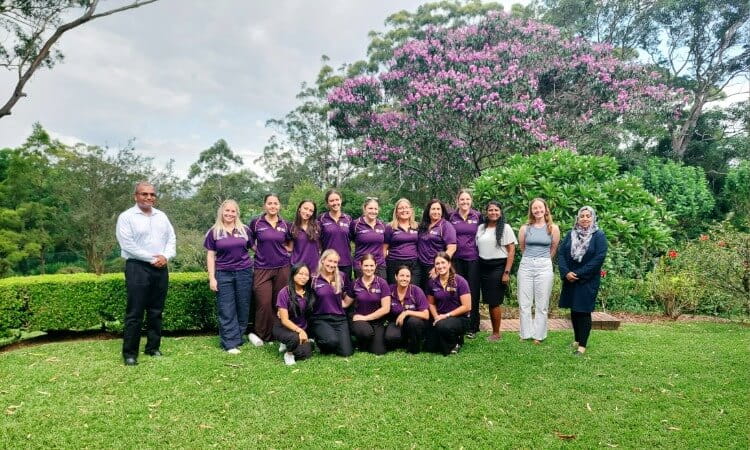
Quality healthcare can change lives, no matter where you live. For fourth-year University of Southern Queensland (UniSQ) Bachelor of Occupational Therapy (Honours) student Jennifer Sadler, learning about rural health has brought home the difference occupational therapists can make in communities beyond the city.
As a mature-age student nearing graduation, Jennifer recently completed Occupational Therapy in Rural Communities, a course that connects classroom learning with the realities of working in regional, rural and remote healthcare.
Across three full-day workshops in Toowoomba, students visited health services and heard from guest speakers, gaining first-hand insight into the challenges and opportunities of rural practice.
The course is part of UniSQ’s commitment to developing the next generation of regional healthcare professionals, giving students like Jennifer practical experience and a deeper understanding of how they can support the health and wellbeing of rural and regional communities.
As she prepares to graduate with research honours at the end of the year, we caught up with Jennifer to hear how the experience has shaped her perspective on her future career.
What was it like experiencing the course through workshops, site visits and guest speakers rather than learning solely in a classroom?
I really valued the way the course was situated in another setting, such as Toowoomba, where we had access to more regional and rural guests and sites. It allowed us to gain rich perspectives on health services in rural and remote communities. I enjoyed the real-world aspect of the course, where it wasn't just about learning in the classroom but learning from practitioners and researchers in their unique work settings.
Was there an experience that particularly stood out?
I found the Momentum Mental Health facility very engaging in showing what occupational therapy and outreach interventions could look like, the funding structures behind such an organisation, and how much our role as future OTs has the chance to make a positive impact for people. Additionally, the chance to chat with researchers at the UQ Rural Clinical School was particularly insightful in helping me understand the exciting projects happening within the rural health research landscape.
What did hearing directly from rural clinicians working in places such as Toowoomba, Dalby and Warwick add to your learning?
Hearing directly from clinicians made the realities of rural practice feel much more tangible. They were able to talk about both the opportunities and the challenges that come with working rurally, including access to services, distance, resources and the need to be adaptable. It was also great hearing how rewarding their work is within their communities and the relationships they've been able to build.
Did the course change your understanding of what it means to work as an occupational therapist in a rural or regional community?
Yes, it changed my understanding of OT work in rural areas. Before the course, I feel I had a more limited idea of what rural OT practice might look like. The course showed me how diverse the role can be and how OTs may need to work more broadly and creatively depending on the needs and resources of the community. It also highlighted how important collaboration, adaptability and understanding the local context are when working rurally. I think what surprised me most was the variety of opportunities available in rural and regional areas. I had probably assumed that working rurally might mean having fewer opportunities, but the course challenged me on that. We saw OTs and other health professionals working across varied areas of practice, and it showed me that rural practice can actually offer opportunities to develop a really broad skill set and make meaningful and lasting contributions to a community.
How did the course help you connect what you've learned throughout your degree with real-world occupational therapy practice?
By fourth year, we've learned so many theories, frameworks and areas of practice, and this course helped combine that learning together. Seeing services firsthand and speaking with healthcare professionals helped me understand how concepts such as person-centred practice, occupational participation, environmental factors, advocacy and health inequities actually translate into everyday practice.
What do students gain from experiencing rural health services firsthand, rather than learning about rural practice solely in the classroom?
There is something really valuable about actually being in the environment you're learning about. You can ask questions, see how the services operate and hear directly from the people actually doing the work. I think it makes learning much more memorable and gives students a more realistic understanding of both the challenges and the opportunities.
As you approach graduation, has the experience influenced where you could see yourself working?
It definitely broadened the practice areas I would consider after graduation. Coming from and living in a metropolitan area, rural practice wasn't necessarily something I had pictured for myself before the course. I wouldn't rule it out, and I think the experience helped me see the value of stepping outside familiarity and being more open to opportunities in regional and rural communities.
Learn more about Occupational Therapy.
Related news
2 min read
25 Sep 2026
3 min read
21 Sep 2026
3 min read
8 Sep 2026