UniSQ professor turns HIV research into a fashion statement ahead of World AIDS Day
3 min read
24 Nov 2026
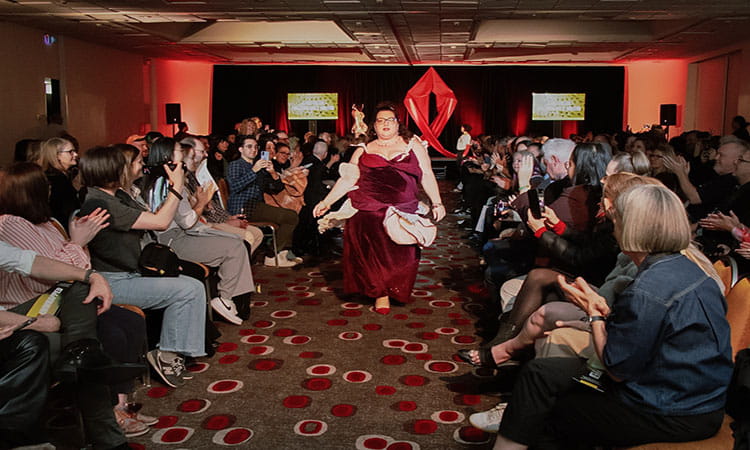
Research is often shared through academic papers, conferences and presentations, but University of Southern Queensland’s (UniSQ) Professor Amy Mullens is using fashion to bring her HIV research to life and challenge the stigma surrounding the condition.
Professor Mullens is one of six Australian HIV scientists whose research and contributions to the HIV community have been translated into fashion garments through HIV Unwrapped, an international initiative bringing together science, fashion and artistic expression.
Her gown, Blossoming Synergies, was created by emerging Melbourne fashion designer Jemma Phelan following nine months of collaboration with Professor Mullens, drawing inspiration from her clinical and research work, personal qualities and commitment to supporting underserved communities.
The collaboration will feature again on 1 December, when all six garments will be displayed as part of the Waratah Blooming exhibition at Customs House in Sydney, as part of the NSW World AIDS Day event.
The exhibition follows the HIV Unwrapped 3.0 runway show in Melbourne in September, where more than 30 garments from international collections were showcased, including six new Australian designs modelled by the scientists whose work inspired them.
Professor Mullens was among the researchers selected to walk the runway in her own gown, describing the experience as a career highlight.
“It was an honour to be selected and to take a pause to appreciate the positive impact my research and clinical work has had over the past 25 years,” Professor Mullens said.
“It was very special to receive this recognition from colleagues and community members and to wear this gown to celebrate and as a symbol of the progress we have made together.”
Professor Mullens is a clinical and health psychologist whose research focuses on reducing health disparities and improving access to early intervention across sexual and reproductive health, including HIV testing, prevention and management.
Her work uses community-led and participatory research approaches, involving people from affected communities in designing and evaluating health innovations that build evidence for new approaches to testing and prevention and improve access to healthcare for those who may otherwise face barriers to services.
This has included research into mobile HIV testing in correctional settings, peer-led and self-testing approaches and point-of-care testing in regional communities.
Professor Mullens said translating research into fashion offered a more interesting and engaging way to communicate its findings, while shifting the narrative around HIV towards hope, resilience and empowerment.
“By associating HIV with something high-profile and positive like fashion, it helps to celebrate people and their resilience rather than stigmatising and punishing them,” she said.
“It is a way of cultivating hope, joy and resilience, and reaching new audiences.”
For Professor Mullens, challenging stigma remains one of the biggest hurdles in the HIV response, despite significant advances in treatment and care.
“People can live happy, fulfilled and productive lives if they are living with HIV. It is now conceptualised as a chronic, manageable health condition, not a death sentence,” she said.
“The biggest challenge with HIV is stigma, which requires us to change the narrative around HIV and how the broader community perceives it.”
The Waratah Blooming exhibition will bring together six garments celebrating the intersection of HIV science, fashion and the people and communities at the heart of the research.
As the world marks World AIDS Day on 1 December, Professor Mullens hopes projects such as HIV Unwrapped will encourage people to look beyond outdated perceptions of HIV and recognise the progress made, while acknowledging the importance of research, access to services and community support.
About the gown: Inspired by the floral watercolour paintings of artist Georgia O’Keeffe, the gown Blossoming Synergies uses voluminous structures to represent flourishing and the breadth of Professor Mullens’ work.
Burgundy velvet and lace symbolise strength, love and passion, while incorporating the red ribbon as a symbol of HIV/AIDS awareness and solidarity.
Delicate, translucent blush textures also reflect Professor Mullens’ vulnerability throughout the project and her work supporting gender-affirming care and partnerships with trans, gender-diverse and non-binary communities.
Related news

4 min read
23 Nov 2026
2 min read
20 Nov 2026
3 min read
10 Nov 2026