UniSQ and TAFE Queensland join forces to create new education pathways
4 min read
18 Nov 2026
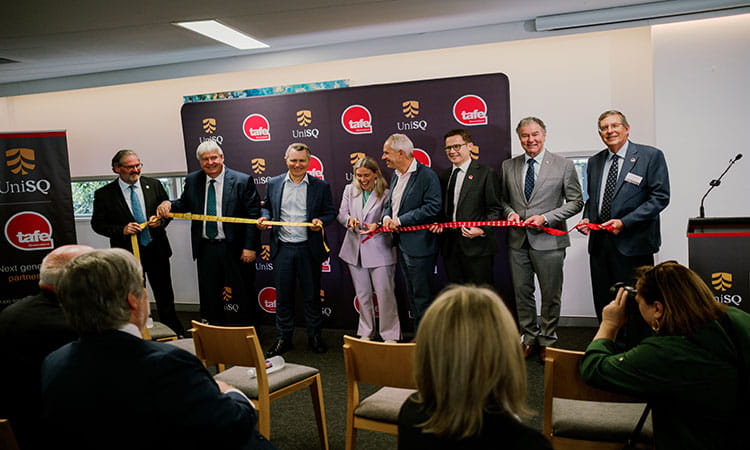
Queenslanders will have clearer pathways between TAFE and university, with greater opportunities to build on existing qualifications and gain new skills, under a major partnership between TAFE Queensland and the University of Southern Queensland (UniSQ).
The Next Generation Partnership will bring vocational and higher education closer together, creating more flexible pathways between certificate, diploma and degree-level study and making it easier for students to build on their qualifications and develop new skills throughout their careers.
It was officially launched at TAFE Queensland's South Bank campus in Brisbane today (18 November).
Supporting the Australian Government’s efforts to create a more connected tertiary education system, the partnership goes beyond traditional credit-transfer arrangements, with the two institutions working together on program design, teaching delivery, student pathways, workforce planning and industry engagement.
Federal Minister for Education Jason Clare said the partnership demonstrated how vocational and higher education could work together to create more opportunities for Australians.
“For Australians to get the skills they need, we need to break down the artificial barrier between TAFE and uni,” Minister Clare said.
“That’s what this fantastic new partnership between UniSQ and TAFE Queensland is all about.
“It will make it quicker, cheaper and easier to get the skills and qualifications people need. And that Queensland and Australia need.”
Initial offerings in 2027 will span early childhood education, sports management, information technology and community services.
Further opportunities for collaboration have also been identified in community health, building and construction management, cybersecurity, and engineering, reflecting emerging workforce priorities and industry demand.
Eligible TAFE Queensland students and graduates will receive four units of credit towards selected UniSQ degrees, with some information technology diploma graduates eligible for up to nine units.
The partnership will strengthen credit recognition, recognition of prior learning and transfer arrangements between vocational and higher education qualifications, helping students build on their existing skills and experience without unnecessary duplication.
For UniSQ PhD student Steven Perren, the journey from a TAFE Queensland trade apprenticeship to university research has taken him further than he ever imagined.
“My own journey highlights exactly why flexible pathways are so important. I progressed from a trade apprenticeship to an Advanced Diploma, then to an engineering degree and now a PhD. None of that was part of my original plan when I first started my apprenticeship,” Mr Perren said.
“People’s interests, goals and careers can change over time. Having clear pathways between vocational education and university allows students to build on their existing skills and pursue new opportunities as their interests develop.
“I believe the combination has made me a more well-rounded engineer because I can understand both the practical challenges faced in industry and the technical approaches needed to solve them.”
UniSQ Vice-Chancellor and President Professor Paul Mazerolle said the partnership reflected the changing ways people learn and build their careers.
“People take different pathways through education and employment. Circumstances, ambitions and opportunities change over time, and our education system needs to be flexible enough to respond,” Professor Mazerolle said.
“The UniSQ partnership with TAFE Queensland is about making education more accessible, more relevant and better connected to the needs of students, employers and the communities we serve.”
TAFE Queensland Chief Executive Officer Tim Rawlings said the partnership is tertiary harmonisation in action, bringing VET and university closer together to give Queenslanders more ways to build the skills and qualifications they need.
“What’s exciting about this partnership is that it goes beyond traditional pathways between VET and university,” Mr Rawlings said.
“We’re bringing the strengths of both sectors together to deliver university degrees in a TAFE Queensland environment.
“Students will be able to study selected UniSQ degrees face-to-face at South Bank, combining TAFE Queensland’s practical, industry-connected approach with UniSQ’s higher education expertise.
Plans are underway to jointly develop and deliver UniSQ-accredited programs at TAFE Queensland's South Bank, Mount Gravatt and Eagle Farm campuses, combining the teaching expertise, facilities and industry connections of both institutions.
Other areas of collaboration include shared teaching facilities at South Bank, joint research and curriculum innovation through TAFE Queensland's Centres of Excellence, and coordinated thought leadership, industry engagement and school outreach activities.
Importantly, the partnership will also explore opportunities for university students to undertake vocational qualifications alongside their degrees, allowing them to gain practical skills and broaden their qualifications while studying.
Through joint governance arrangements and coordinated regional workforce planning, the institutions will work together to identify emerging skills needs and develop educational offerings that respond to industry demand, particularly in regional Queensland.
The Next Generation Partnership aims to provide a model for closer collaboration between universities and vocational education providers nationally, demonstrating how a more integrated tertiary education system can deliver better outcomes for students, industry and communities.
Related news
3 min read
12 Nov 2026
8 min read
27 Oct 2026
4 min read
23 Oct 2026