Connecting communities: Shirley-Anne Gardiner on wellbeing, research and partnerships
8 min read
27 Oct 2026
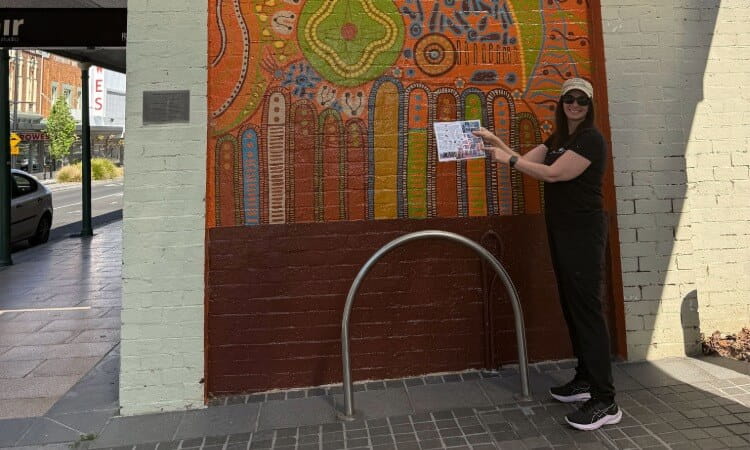
As a community leader in Toowoomba, Shirley-Anne Gardiner has spent much of her career supporting people, strengthening community connections and improving wellbeing.
As CEO of Momentum Mental Health, she continues that work while championing opportunities for University of Southern Queensland (UniSQ) students to receive practical experience and participate in projects that make a difference in the community.
Momentum’s strong partnership with UniSQ has seen more than 100 students involved in placements and industry projects since the start of 2025.
Their work has helped Momentum develop practical resources, explore new ideas and shape strategic decisions, demonstrating the value of collaboration between universities and not-for-profit organisations.
Alongside her leadership role, Shirley-Anne is pursuing a PhD at UniSQ, exploring how public art journeys around Toowoomba could encourage physical activity and improve wellbeing.
Inspired by her own experience of recovery and the impact of the city’s murals, her research brings together community participation, movement and public art.
We spoke with Shirley-Anne about her career, her research and how partnerships between universities and community organisations can benefit the wider community.
You’ve spent much of your career supporting people and communities across Toowoomba. What has driven your commitment to this work?
I grew up in New Zealand to teenage parents, and from quite a young age I became aware that people sometimes treated me differently because of my upbringing and where I came from. As I got older, I became increasingly interested in understanding what I later learned were the social determinants of health – the circumstances in which people are born, grow, live and work, and how profoundly these can influence the opportunities available to them. That interest led me to study social anthropology at university and ultimately shaped my career in healthcare and community services. During my seven years as Executive Director of Toowoomba Hospital, I had opportunities to support community learning and connection through leadership talks and partnerships. During COVID-19, I also established a Vulnerable Communities Group, which brought local community organisations together so we could communicate, collaborate and better support vulnerable people during an incredibly difficult period. That commitment to community has stayed with me throughout my career and is a large part of what drives the work I do today at Momentum.
As CEO of Momentum Mental Health, what are some of the challenges you see facing people in the community when it comes to mental health and wellbeing?
The social determinants of health have a significant impact. Financial circumstances, education, housing, transport, social connection and health literacy can all influence a person's ability to access support and maintain their wellbeing. But one of the biggest challenges I still see is shame and stigma. I think it is incredibly important that we change the narrative around talking about mental health. Speaking up when you are struggling isn’t a weakness. It takes resilience and courage to recognise when things aren't going well and to reach out for support. Every single one of us will experience periods in our lives when our wellbeing isn't where we would like it to be. Mental wellbeing isn’t something that only applies to people with a diagnosed mental illness - it applies to all of us. That is something we are passionate about at Momentum: making conversations about wellbeing normal, accessible and part of everyday life.
Momentum Mental Health has developed a strong partnership with UniSQ, including working with final-year students on projects that have produced resources and programs for your organisation and clients. What has the partnership meant to Momentum and what value have the students brought to your organisation?
We are passionate about supporting the future workforce through placements and industry projects. Since the start of 2025, Momentum has hosted 19 UniSQ Bachelor and Masters-level placement students from occupational therapy, clinical psychology, human services and counselling. As an industry partner, we also give students the opportunity to work on genuine organisational challenges and develop resources and strategic solutions we can put into practice. We’ve also had 90 UniSQ students from disciplines including management, arts, psychology, marketing, criminology, creative writing and public health participate in industry projects with Momentum. That means 109 UniSQ students have now been directly involved with Momentum through placements and industry projects. Their work has produced practical resources, including brochures, staff guides and communication tools, while providing insights that have helped shape strategic decisions. Some student projects, for example, contributed to our thinking about expanding into youth services. Momentum supports more than 250 people each month, with people coming to us with very different experiences and levels of wellbeing – from people experiencing significant mental health challenges and trauma through to people who simply want to proactively improve their wellbeing. That creates a rich real-world learning environment for students.
From your perspective, what can universities and local not-for-profit organisations and community groups achieve when they work directly together?
University partnerships give not-for-profits access to expertise, fresh thinking, emerging research and technology they might otherwise lack the resources to explore. Students can also challenge organisations to think differently. For example, one UniSQ student developed a social media guide for Momentum that included TikTok, an area staff had little knowledge of at the time. In return, community organisations give students access to real people, organisations and real-world problems. Students can listen to people’s experiences, understand the complexity of their circumstances and, importantly, walk alongside them. Their work isn't hypothetical – it can genuinely make a difference to another person's life. That connection between academic learning and community experience is incredibly powerful.
Your PhD research explores how public art can be incorporated into ‘journeys’ around Toowoomba to encourage physical activity and wellbeing. What prompted you to explore the connection between public art, movement and wellbeing?
My PhD actually came about almost by accident. In 2022, I fell down a flight of stairs and broke three bones in my back. During my recovery I found myself having a bit of a mid-life crisis! Walking became an important part of my physical recovery, but I also discovered that walking around Toowoomba and looking at our amazing murals helped clear my mind. It made me feel better physically, mentally and even spiritually. Then one day I was walking with my husband when a couple approached us and asked if we knew where they could find a particular piece of public art. They weren’t from Toowoomba but had heard about our beautiful murals. They explained that their daughter was in hospital, and they wanted to photograph the mural and send it to her to cheer her up. That interaction stayed with me. It made me think about the relationship between public art, place, movement and wellbeing, and the different meanings people can attach to art in public spaces. When I told Professor Tracy Kolbe-Alexander that story in 2023, she encouraged me to turn the idea into a PhD and investigate whether public art journeys could encourage physical activity and wellbeing in Toowoomba. Tracy is now one of my supervisors, alongside Professor Andrew Hickey, both from UniSQ. I’m now halfway through my part-time PhD and loving both the research and the support UniSQ provides. In December, I will also present my research at an international physical activity conference in Hong Kong, which is incredibly exciting.
Your research involved co-designing public art journeys around Toowoomba with local residents. What did you learn from the community through this process, and what do you hope the journeys will ultimately achieve?
One of the biggest things I have learned is just how powerful co-design can be. Rather than me sitting behind a desk deciding what I thought people would want, I worked with 28 community members to co-design seven public art journeys incorporating 131 pieces of public art around Toowoomba. Even the language changed because of the co-design process. We deliberately stopped calling them “walking routes” and began calling them “journeys”. The community felt that “walking” could unintentionally exclude people, whereas a journey could involve walking, running, strolling or wheeling. That seemingly small change really reflects what co-design is about – listening to the people who will ultimately use what you create. The community members brought different experiences, abilities and perspectives to the research, and they saw things I would never have identified on my own. Ultimately, I hope these journeys encourage people to move more, discover parts of their community they may not have noticed before, engage with public art and experience the wellbeing benefits that can come from movement, connection and engagement with place. I would also love to see the research provide a model that could potentially be adapted by other communities. Public art already exists in towns and cities across Australia. If we can find ways to use those existing community assets to encourage physical activity, connection and wellbeing, there is enormous potential.
What would you say to other community organisations considering a partnership with UniSQ?
UniSQ's partnership with Momentum Mental Health has enriched the lives of students, our staff and, most importantly, our clients. What I love about the partnership is that everyone benefits. Students gain genuine real-world learning experiences, while Momentum benefits from their knowledge, creativity, curiosity and fresh perspectives. Our clients also contribute to the learning of the next generation of professionals. I believe regional universities and local not-for-profits have an incredible opportunity to work together in this way. We look forward to growing our partnership with UniSQ, and I would encourage other community organisations to explore similar opportunities. When universities and community organisations work together, everybody learns – and the whole community benefits.
Related news
4 min read
23 Oct 2026
3 min read
23 Oct 2026
5 min read
22 Oct 2026