By Dr Vicki Christopher, University of Southern Queensland
The past year has seen significant reforms to strengthen child safety within early childhood education and care services.
As Australia strengthens child safety measures, the ‘four eyes’ principle has gained momentum in public discussion as a safeguarding practice.
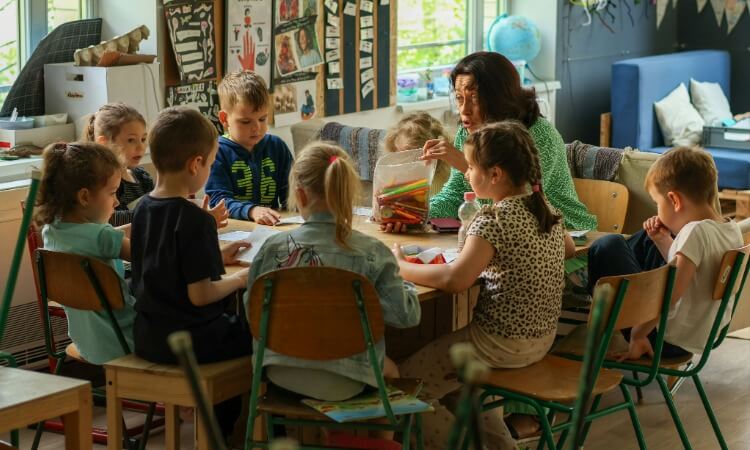
The principle is based on the premise that no child should be left alone and unobserved with a single adult. Instead, adult interactions with children should be visible to more than one adult.
In practice, this translates to open-door policies, visible nappy changing, and shared supervision to reduce opportunities for abuse and harm.
While the ‘four eyes’ principle is not specifically mandated by law, it is one way of implementing broader child safety expectations.
These are reflected in the National Principles for Child Safe Organisations, the Education and Care Services National Law and the Education and Care Services National Regulations, which require adequate supervision and protection from harm to ensure children’s safety, health and wellbeing.
At an organisational level, early childhood services have introduced the ‘four eyes’ (or ‘two person’) principle through policies and codes of conduct.
Child safety is about more than surveillance
Educators and parents alike welcome these types of safeguards to protect children, but they raise the question of what authentic child safety looks like.
This is a timely consideration during Children’s Week (24 October – 1 November) – a time to consider not only how children are protected against harm, but also how their rights, voices and wellbeing are upheld.
Keeping children safe is about more than surveillance through a second set of eyes. We know that a child can be in a room full of adults and still not be safe.
Research increasingly recognises that safeguarding is not simply a matter of surveillance and compliance, but also of relationships, trust and children’s participation in decisions that affect them.
When discussions of child safety focus solely on compliance measures, we risk overlooking the experiences of children themselves.
Balancing protection with children’s rights
The United Nations Convention on the Rights of the Child recognises children’s rights to protection from violence, abuse and neglect. It also recognises their rights to dignity, privacy and participation.
In practice, these rights can sometimes sit in tension.
Safeguarding practices designed to maximise visibility must also respect children’s privacy and dignity.
Trusting and responsive relationships are essential to children’s learning and wellbeing and must not be undermined by excessive monitoring.
A child rights approach does not reject the four eyes principle. Rather, it asks us to consider whether such measures are being implemented in ways that recognise children as rights holders, rather than merely as recipients of adult surveillance.
The ‘four eyes’ principle and similar practices may well help reduce harm, but they are only one element of the broader child-safe culture that is needed.
Listening to children is part of keeping them safe
Children are safest when they are listened to, believed, respected and able to speak up – not only when they are watched.
Children should also have a voice in how safeguarding practices are developed and implemented. Their experiences and perspectives are essential to understanding what genuinely makes them feel safe.
Recent research suggests safeguarding is best understood not as a compliance exercise, but as an intersection of rights, relationships and regulation. In other words, keeping children safe requires more than policies and procedures.
It requires trusting relationships, responsive adults and learning environments where children’s rights are respected and upheld.
A child can be constantly visible and still feel unheard. A child can be surrounded by adults and still not feel safe.
Visibility matters, but authentic safeguarding also depends on whether children can trust the adults around them, understand their rights and know that their concerns will be taken seriously.