Children today are growing up in a world saturated with stories of war, displacement and uncertainty. News reports of conflict, refugees and humanitarian crises can be difficult for adults to process, let alone children.
Yet children’s literature has long offered ways of exploring challenging experiences through stories of friendship, belonging and hope.
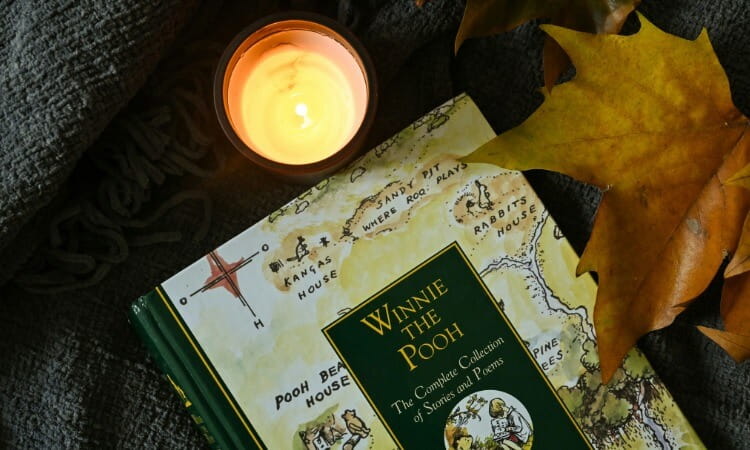
As Winnie-the-Pooh approaches its 100th birthday on Wednesday (14 October), it is worth looking again at the honey-loving bear and his woodland companions.
While Pooh is often celebrated as a symbol of childhood innocence, the story behind the Hundred Acre Wood reveals surprising connections to war, loss, resilience and healing.
A classic born in the shadow of war
When A. A. Milne's Winnie-the-Pooh was published in 1926, Britain was still coming to terms with the devastation of the First World War.
Milne had served during the war, including active service in France. Illustrator Ernest Shepard fought on the Western Front and later produced war sketches, maps and topographical drawings informed by his military experiences.
The world they created together could hardly have been more different.
Instead of battlefields, there were woodlands. Instead of enemies, there were friends. Instead of violence, there were small adventures shaped by kindness, patience and mutual support.
It would be simplistic to describe Winnie-the-Pooh as a war story. Yet it can be understood as a response to a world recovering from war.
The Hundred Acre Wood offered readers something many people desperately needed in the aftermath of conflict: emotional safety, stability and companionship.
Children's literature and the search for humanity
Over the past decade, our research into children's literature dealing with war, displacement and trauma has explored how authors and illustrators transform difficult histories into stories accessible to young readers.
In our work on picture books about the 1914 Christmas Truce, we found authors frequently foreground humanity, compassion and peace while carefully managing representations of violence, suffering and loss.
Seen through this lens, Winnie-the-Pooh becomes more than a collection of children’s stories.
Milne and Shepard may not have written directly about war, but they created a world where cooperation consistently triumphs over division and where friendship overcomes fear.
The qualities celebrated in the Hundred Acre Wood – security, belonging and trust – are precisely those that conflict threatens.
A place where everyone belongs
One reason Pooh continues to resonate is the way the stories accommodate difference.
Piglet is anxious. Eeyore is melancholy. Rabbit seeks order and control. Tigger is impulsive and unpredictable. Yet every character belongs.
Research into children’s picture books about refugees similarly demonstrates how stories can encourage readers to recognise the humanity of those who appear different from themselves.
The Hundred Acre Wood functions in much the same way. Characters are not excluded because of their fears, limitations or eccentricities. Instead, those differences become part of the fabric of community.
This vision of belonging may help explain Pooh's enduring appeal. The stories present vulnerability not as a weakness to overcome, but as something accepted and supported within relationships.
The bear behind the bear
The origins of Pooh are more complicated than many readers realise.
Although the character is usually associated with Christopher Robin Milne’s teddy bear, Shepard based his illustrations largely on “Growler”, a toy belonging to his own son, Graham.
The story highlights an important truth about children’s literature: great books are often collaborative achievements.
Milne recognised the significance of Shepard’s contribution and made the unusual decision to grant him royalties.
At a time when illustrators were rarely treated as creative equals, Milne acknowledged that the success of Pooh depended on both words and images.
Modern scholarship increasingly recognises that illustrations do far more than accompany texts.
They shape meaning, influence emotional responses and help readers understand characters and events.
Without Shepard’s artwork, it is difficult to imagine Pooh becoming the cultural icon he is today.
From the Hundred Acre Wood to Cherry Tree Lane
The Shepard family's contribution to children’s literature extended beyond Pooh.
Less widely known is the connection between Winnie-the-Pooh and Mary Poppins.
When P. L. Travers sought an illustrator for Mary Poppins, Shepard declined the opportunity because of existing commitments.
Travers later encountered artwork created by his daughter, Mary Shepard, and recognised its potential.
Mary Shepard went on to illustrate all eight Mary Poppins books, establishing the visual identity that readers continue to associate with the famous nanny.
The parallel is striking. Just as Ernest Shepard’s illustrations became inseparable from Milne’s stories, Mary Shepard’s artwork became central to readers’ understanding of Mary Poppins.
Together, father and daughter helped shape two of the most influential worlds in children’s literature.
Looking beyond childhood innocence
As Winnie-the-Pooh turns 100, it is tempting to view the stories simply as nostalgic celebrations of childhood innocence.
The centenary, however, also offers an opportunity to recognise the experiences that helped shape them.
The Hundred Acre Wood emerged from the imaginations of two men whose lives had been profoundly affected by war. Their stories offered readers more than an escape from reality.
They offered a vision of kindness, friendship and belonging in a society recovering from loss.
The legacy extends further through the work of Mary Shepard, linking the Hundred Acre Wood to another iconic literary landscape, Cherry Tree Lane.
Across both worlds, illustrations became central to how generations of readers experienced stories of wonder, reassurance and hope.
A century later, children continue to encounter stories of conflict, displacement and uncertainty. That may be one reason Pooh remains so relevant.
Beneath the gentle humour and simple adventures lies a powerful reminder that literature and art can help us make sense of difficult experiences. Even in troubled times, stories can create spaces for empathy, resilience and hope.
Perhaps that is why a bear of very little brain still has so much to teach us.