‘A perfect storm’: UniSQ report warns housing disaster accelerating in the regions as laws fall short
3 min read
15 Apr 2026
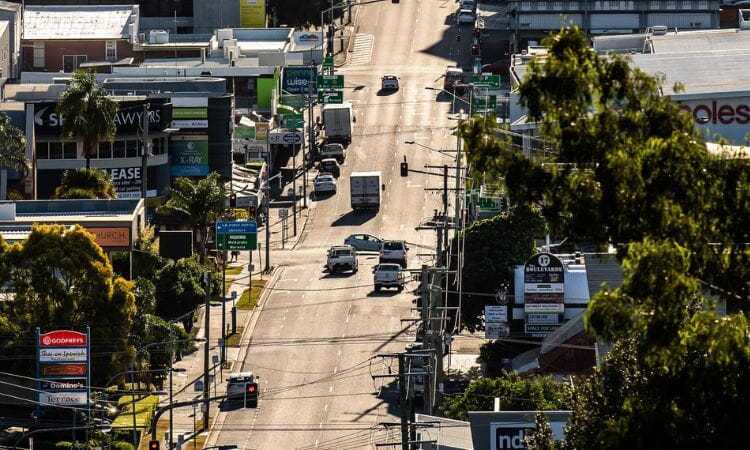
A new University of Southern Queensland (UniSQ) report shows Australia’s housing disaster is deepening, with frontline community organisations warning that poorly-designed laws and outdated policies are failing to deliver despite billions in housing spending.
Findings from the residential security report drew on roundtable discussions in Ipswich, Toowoomba and the Southern Downs, capturing the real-world experiences and expectations of communities regarding “adequate housing”.
UniSQ researchers say the insights expose major gaps in housing regulation, affordability frameworks and regional planning, and highlight the urgent need for policy that reflects the lived realities of regional Australians.
The report shows the crisis is now affecting groups once considered relatively safe, with dual-income families and older women increasingly experiencing residential instability amid a “perfect storm” of economic and policy pressures.
“We heard from participants in the roundtable discussions that people, including families with a ‘healthy’ income and women, are experiencing homelessness and residential insecurity,” project lead Dr Julie Copley said.
“We heard that many people who would never have imagined they might be in such dire circumstances now are.
“This means they have not planned for this, aren’t familiar with the services available, and are bewildered.”
Dr Copley said one of the most striking findings was how differently each community in Southern Queensland experiences housing stress.
“The disaster looks completely different from one community to the next,” she said.
“In the Southern Downs, housing exists but is completely unaffordable for those who need it.
“In Toowoomba, people arrive expecting the ‘Garden City’ to offer options, only to find severe shortages, and in Ipswich, the predominance of traditional three-bedroom and four-bedroom homes leaves few choices for single and couple households, and larger family households.
“This diversity shows exactly why housing laws must mediate a wide range of needs and circumstances, and why the job of legislators is so complex.”
The researchers argue that addressing Southern Queensland’s residential insecurity demands wide-ranging, committed and community-focused responses from Australia’s legislators, in the same way laws are made to address environmental disasters, such as floods, fires and droughts.
“Rents in regional Queensland are the least affordable in the country, with households spending an average of 32 per cent of their income just to keep a roof over their heads,” Dr Copley said.
“Yet despite the urgency, Australia’s parliaments are not legislating for meaningful solutions.
“Politicians are frightened to act in the ways that they should because the housing security disaster is complex, and they aren’t sure what people value and will accept.
“Instead of bold law-making, Australia’s parliaments are pouring billions into new housing, hoping dollars alone will fix the problem, but the disaster continues to deepen.”
Dr Copley said governments must recognise that housing is not simply a commodity but a core human right that Australia is failing to uphold.
“The Universal Declaration of Human Rights and the International Covenant on Economic, Social and Cultural Rights oblige our governments to ensure people can live in ‘security, peace and dignity’,” she said.
“These obligations have been in force since 1976, yet Australia is still falling far short of protecting and promoting this right.”
She said if policymakers take only one message from the report, it is that the housing crisis cannot be solved by supply and spending alone.
“This disaster requires legislative action that protects the physical and mental wellbeing of people, families and communities, including those in rural and regional areas,” Dr Copley said.
Read the report or more about UniSQ’s Institute for Communities and Regional Development.
Related news

5 min read
7 Oct 2026

9 min read
24 Sep 2026
2 min read
16 Sep 2026