Unearthing local history: UniSQ Archaeology Field School returns for 2026
3 min read
07 May 2026
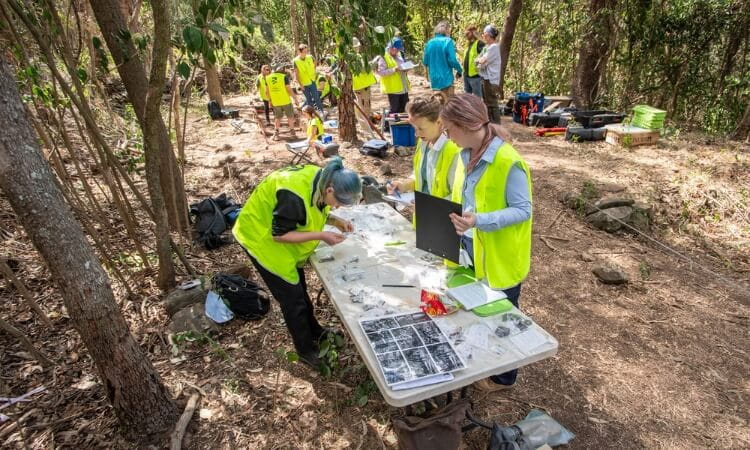
An almost-century-old chapter of Toowoomba’s past is being brought back to life, with locals invited to help uncover the remains of a 1930s camp hidden in bushland at Redwood Park.
The site, known as Eagles Nest Camp, was once home to unemployed and itinerant men during the Great Depression. Now heritage-listed and one of the only known sites of its kind in Queensland, it offers a rare window into a period of hardship, resilience, and survival.
The excavation will form the centrepiece of the University of Southern Queensland’s (UniSQ) 2026 Archaeology Field School. Now in its third year, the hands-on program will once again give the community a chance to dig into a unique chapter of Toowoomba’s rich and layered past.
Led by UniSQ’s Professor Bryce Barker, the Field School invites students, career changers and curious locals to step onto a real archaeological site in Toowoomba’s Redwood Park.
“We’re really excited to open our Field School to the community again because the Toowoomba region has such a strong and genuine appetite for local heritage,” Professor Barker said.
"With the support of the Toowoomba Regional Council, UniSQ has been undertaking archaeological excavations at Eagles Nest Camp since the 1990s.”
“Over that time, it’s become much more than an excavation site. It’s a place where we’re bringing Toowoomba’s past back into the light by uncovering the lives once lived here.”
“We want to make sure these stories become a lasting part of our local history and aren’t lost or forgotten over time.”
As part of the Field School, participants will learn how to locate, excavate and interpret archaeological sites by getting hands-on with the tools and techniques used by professionals in the field.
“This program gives people the chance to actually participate in archaeology, not just learn about it from textbooks,” Professor Barker said.
“It helps bridge one of the biggest gaps in the discipline by giving people access to fieldwork, while also allowing them to build practical skills in an authentic environment.”
For UniSQ anthropology and archaeology student Frances Hicks, the Field School has grown into something much bigger than she first expected.
“When I first joined the Field School in 2023, I didn’t have my honours topic decided. After volunteering in 2024 and coming back again in 2025, it naturally became part of my research,” she said.
“My thesis now explores the archaeology of homelessness, linking it to the Eagles Nest Depression Camp.
“The experience has helped me become more focused on the excavations and artefacts, and how they fit into the bigger story of the site.
“It’s pretty special having this site in my proverbial backyard and being able to be part of ongoing archaeology rather than a mock site.”
Professor Barker said the Field School offered more than just the chance to uncover history.
“Participants will develop practical, industry-relevant skills that contribute towards the Australian Archaeology Skills Passport,” he said.
“This is a valuable credential that can open doors to further study and employment.”
Findings from UniSQ’s 2026 Archaeology Field School will inform ongoing research and help shape a future heritage management plan, with the goal of opening the site to the community for experience.
Related news
3 min read
29 Sep 2026
2 min read
25 Sep 2026
3 min read
21 Sep 2026