Meet the ACDC Researchers - explore their professional journeys, current projects, and what inspires them outside of research.
Our Researchers
Professor Sambasivam Periyannan
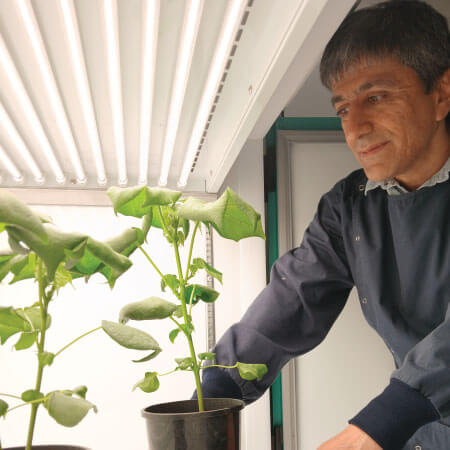
Professor Sambasivam Periyannan is the ACDC's Director, Domain B Leader, and a Professor in Crop Molecular Genetics.
Growing up on a small farm in southern India, where sugarcane red rot and cassava mosaic virus were constant challenges, sparked a lifelong fascination with plant diseases and led to a career in crop pathology.
After completing his PhD at the University of Sydney in 2011, he started as a postdoctoral fellow (2011-2016) at CSIRO, where Sam eventually became an independent scientist in 2016. Between 2107 - 2019, Sam took a secondment position at the Australian National University to complete an ARC DECRA Fellowship. On return to CSIRO, Sam served as Crop Resistance Genes Team Leader from 2019 - 2021 before joining UniSQ's Centre for Crop Health as an Associate Professor in Crop Molecular Genetics in 2022.
Drawing on extensive leadership experience, deep research and industry expertise, and well-established national and international connections, Sam was appointed Director of the ACDC to lead and strengthen this national collaboration in cotton disease research and management.
When not researching plant diseases, you’ll find Sam exploring Toowoomba’s great outdoors, hiking, discovering local cafés, cooking new recipes, or spending time with family and friends.
Associate Professor Linda Smith
Systems-based disease control packages
Spatial data analytics and modelling
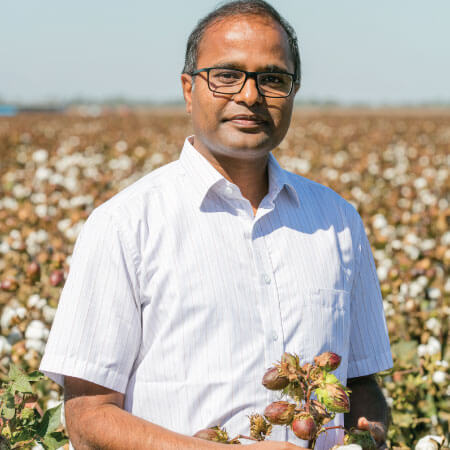
Associate Professor Linda Smith is the ACDC's Deputy Director, Domain A and C Leader, and the Principal Plant Pathologist, Qld DPI. Linda was born in Middlesex, a county of Greater London, UK, and migrated with her family to Perth, Western Australia at the age of four. She grew up in a suburb of Perth and later completed a Bachelor of Agricultural Science (Honours) at the University of Western Australia.
In 1988, Linda moved to Brisbane, Queensland for employment, where she has lived ever since. She went on to complete both a Master’s degree (Microbiology/Nematology) and a PhD (Plant Pathology) at the University of Queensland. Over a distinguished 35‑year career with the Queensland Department of Primary Industries (QDPI), she has worked as a Plant Pathologist, leading a team focused on supporting the Australian cotton industry. Her team has provided diagnostic services for fungal diseases and reniform nematode, conducted disease surveys to track prevalence and emerging threats, and developed soil health and management strategies aimed at fostering disease-suppressive soils.
Her work has contributed to the management of key cotton diseases, including Fusarium wilt, Verticillium wilt, reoccurring wilt, and reniform nematode. She has also led seven consecutive Cotton Research and Development Corporation (CRDC) funded cotton pathology projects.
Linda finds great satisfaction in working with cotton growers and consultants, valuing the strong relationships built through years of field surveys and collaboration. She also appreciates the CRDC’s openness to innovative ideas and its support for collaborative research. Being involved in the Australian Cotton Disease Collaboration (ACDC) alongside UniSQ and multidisciplinary teams is particularly rewarding, as it contributes to improving disease management and ensuring industry profitability.
Outside of her professional life, Linda enjoys spending time with her family, cycling, travelling, reading, and experimenting with new recipes—especially when she can combine travel with cycling adventures.
Linda is an Adjunct Associate Professor at the University of Southern Queensland.
Dr Alexandros Georgios Sotiropoulos
Research Fellow (Bioinformatics) - University of Southern Queensland
Project B1.3: Monitoring pathogen genetic diversity
Project B1.4: Reference genome for cotton pathogens
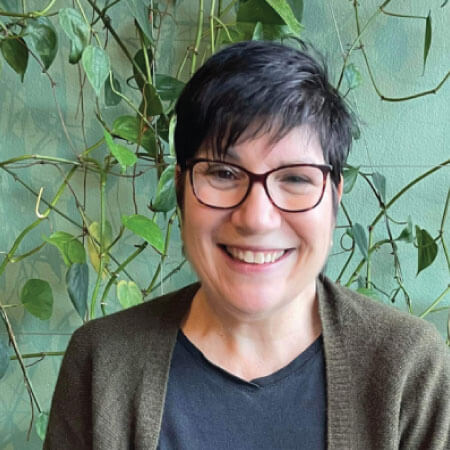
Alex grew up in a mountainous town in Greece before studying biology in Thessaloniki. Driven by a strong interest in genetics, Alex went on to work and study across Europe and Australia, focusing on the biology of pathogenic microorganisms, particularly plant‑infecting fungi.
Alex's research has consistently centred on understanding how harmful microorganisms evolve and spread. From training in virology during their Master’s degree to extensive PhD research on fungal plant pathogens, he has focused on genetic diversity, plant–pathogen interactions, and the migration of pathogens across crops and regions. Most recently, Alex's work examined powdery mildew pathogens affecting wheat and other grass species.
Cotton’s importance across diverse Australian climates and growing regions makes it both economically significant and scientifically compelling. Working closely with cotton growers and pathologists to better understand fungal diseases, fungicide resistance, and pathogen virulence is a strong motivator, particularly as this collaboration enables research outcomes to directly support practical, on‑farm decision‑making.
Outside of research, Alex enjoys creative pursuits such as writing fiction, singing, and watching films. He also values time spent outdoors, whether exploring natural environments, swimming in the sea, or simply relaxing under open skies.
Associate Professor Alison McCarthy
Associate Professor in Mechatronics, Irrigation and Cropping Systems, University of Southern Queensland
Project C1.2: Machine vision system development to detect and differentiate verticillium and fusarium wilts
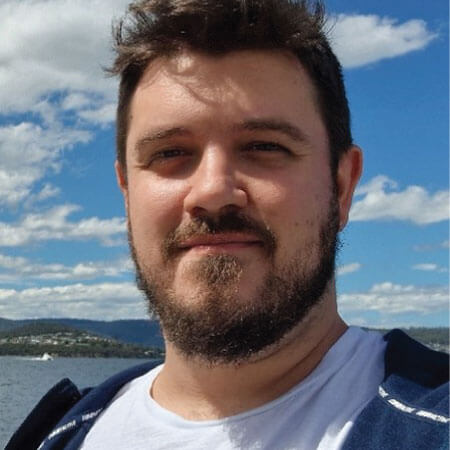
Alison is a mechatronic engineer, specialising in the integration of mechanical, electronic, and software engineering, with 15 years of research experience in the cotton industry. Her career began with a Cotton Research and Development Corporation (CRDC)–funded PhD scholarship, followed by a role as a researcher leading four CRDC‑funded projects.
Alison is passionate about applying engineering solutions to real‑world agricultural challenges, helping growers meet the demands of a growing global population while managing limited resources. Much of her work has focused on the cotton industry, where she has led research projects that conceptualise and develop innovative technologies and successfully translate them into commercial products.
Her research spans the development of new sensing and control technologies for automated agronomic assessments, insect scouting, and irrigation and nutrition management. This includes leading the development of algorithms for canopy temperature sensing technology, now used by approximately 60% of the Australian cotton industry to inform irrigation management decisions.
In addition to cotton research, Alison has led technology‑focused projects for the Grains Research and Development Corporation (GRDC), Monsanto, and John Deere. She values working within an industry that brings together expertise from across plant science, social science, engineering, economics, and business, and enjoy being part of multidisciplinary teams that ensure the cotton industry remains a global leader in efficiency and innovation.
Outside of work, Alison enjoys knitting or crocheting, reading to learn new things, and exercising to maintain her health and wellbeing.
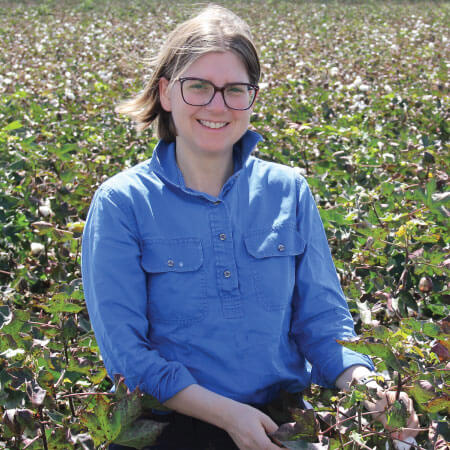
Dr Cassy Percy
A Senior Research Fellow within the UniSQ Centre for Crop Health, Cassy specialises in soilborne fungal diseases of agricultural crops. Her research focuses on genetic resistance and tolerance, infection pathways, host–pathogen interactions, and disease diagnostics, including emerging technologies.
Following a PhD, Cassy spent five years with the Queensland Department of Primary Industries working on soilborne diseases in wheat, before joining UniSQ over a decade ago. Since then, her work has included disease detection and quantification, pathogen interactions, yield impacts, and disease control in winter cereals.
Although relatively new to the cotton industry, Cassy brings nearly 20 years of experience working with soilborne pathogens. She values collaboration with researchers, CottonInfo, CRDC, and growers, and is motivated by research that supports sustainable production and grower success.
Outside of work, Cassy enjoys swimming, gardening, travelling, spending time with family, and creative pursuits such as macramé.
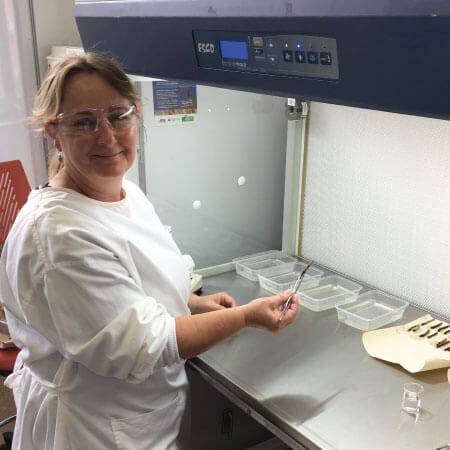
Dr Dinesh Kafle
Plant Pathologist, Queensland Department of Primary Industries
A2.1: Diagnostic development, diagnostic support and cotton pathology collection
A2.3: Pathogen inoculum: spore trapping to detect aerial spores of cotton pathogens
Dinesh grew up in Nepal, where he earned a Bachelor of Science in Agriculture from Tribhuvan University. He went on to complete a Master of Science in Agriculture, specialising in Plant Protection, at the Hebrew University of Jerusalem in Israel, followed by a PhD in Ecology from Freie Universität Berlin, Germany. His doctoral research focused on plant‑mediated interactions between herbivores and microbes.
This academic journey has provided a strong foundation in general agronomy, plant pathology, nematology, and integrated disease management. Dinesh now applies this expertise to innovative research supporting the Australian cotton industry. His work spans plant–herbivore interactions, plant pathology, nematology, and sustainable disease management strategies.
Dinesh has contributed to Cotton Research and Development Corporation (CRDC)–funded projects investigating reniform nematode ecology and the priming of cotton defence against soil‑borne diseases and nematodes using silicon. His experience includes glasshouse and field experiments, cotton disease surveys, diagnostics, pathogen identification, and the development of practical, sustainable management solutions. These contributions have established him as a valued member of the cotton disease research community.
Dinesh is driven by a commitment to improving crop health and productivity through innovative science. Collaborating with leading researchers, growers, and industry organisations—including the CRDC—enables him to deliver research with real‑world impact. He is particularly motivated by the development of cutting‑edge tools such as rapid diagnostics and spore trapping technologies, as well as by sharing knowledge directly with growers to support informed decision‑making and long‑term industry success.
Outside of work, Dinesh enjoys cycling and hiking to stay active and connected with nature. He also has a keen interest in history and politics and enjoys watching films across a wide range of genres.
Contact Dinesh via email dinesh.kafle@dpi.qld.gov.au
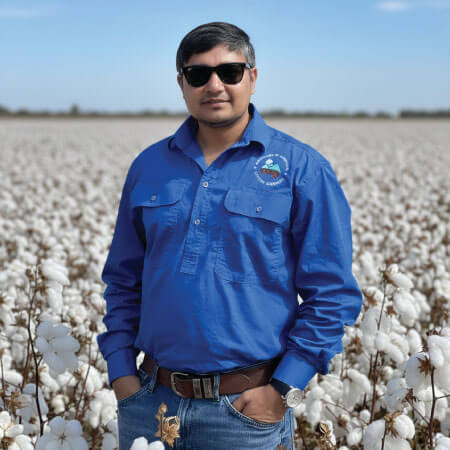
Linda Scheikowski
Senior Plant Pathologist – Queensland Department of Primary Industries
Project A1.2: Irrigation and Nutrition Management to Reduce Cotton Wilt Disease Incidence
A Senior Plant Pathologist with Queensland DPI, Linda Scheikowski plays a key role in Project A1.2, which focuses on reducing the incidence of cotton wilt diseases through improved irrigation and nutrition management.
Raised on a mixed grains and cattle property in northern New South Wales, Linda's early exposure to agriculture shaped a lifelong interest in crop production and plant health. She completed a Bachelor of Science at the University of New England, followed by a Master of Science in Agriculture at the University of Sydney.
Throughout her career, she has been heavily involved in research on the management of Fusarium wilt of cotton, particularly during periods when the disease posed a major threat to the industry. Early work included screening cotton breeding lines for Fusarium resistance, contributing to the development and adoption of the more resistant varieties now available to growers. Linda has also investigated crop rotation strategies for managing both Fusarium and Verticillium wilt and conducted pathogenicity testing on rotation crop species to determine host susceptibility.
When reniform nematode was first detected in Theodore, central Queensland, Linda was deeply involved in initial sampling to map the extent and distribution of the pest. This work expanded into longer‑term research, including crop rotation studies aimed at managing this soil‑borne nematode. Over many years, she has contributed to extensive disease surveillance surveys across all Queensland cotton-growing regions and northern New South Wales, working closely with growers and consultants to monitor disease occurrence and distribution.
Linda values the cotton industry’s diversity, innovation, and strong culture of collaboration. The openness of growers to share their knowledge and experiences—and their enthusiasm for continuous improvement—has made her work both rewarding and impactful.
Outside of research, Linda enjoys spending time with family, hiking, reading, and cooking.
Contact Linda via email: linda.scheikowski@dpi.qld.gov.au
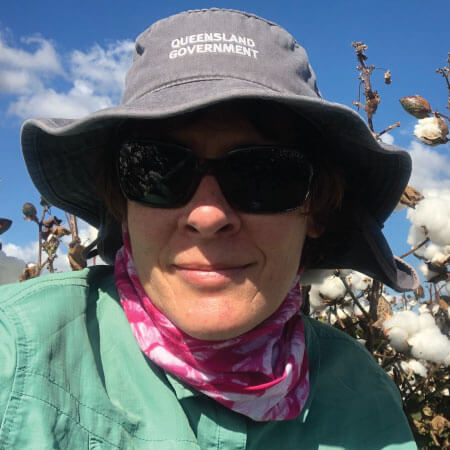
Dr Noel Knight
Senior Research Fellow, University of Southern Queensland
Fungicides and plant defense mediators for the Australian cotton industry inferred from national and global analyses
Noel's roots are on the Darling Downs, where he grew up on a dairy and beef farm alongside their mother’s GP surgery on the same property. This unique blend of agriculture and medicine fostered an early appreciation for evidence‑based decision‑making, a perspective that continues to shape his work today.
Noel is now a plant pathologist and extension leader passionate about bridging laboratory science with on‑farm realities. His work focuses on molecular diagnostics, pathogen diversity, fungicide stewardship, and biosecurity, with a strong commitment to translating research outcomes into practical strategies for growers and industry.
His career spans research across cereals, beetroot, mung beans, and now cotton, working on diseases such as Fusarium crown rot, net blotch, Cercospora leaf spot, and tan spot. Project involvement has included diagnostic development, pathogen diversity and fungicide resistance studies, investigations of plant–microbe interactions to understand how pathogens invade and damage plants, research into pathogen complexes and how multiple infections interact, as well as extension and stewardship initiatives.
Noel values the cotton industry’s forward‑thinking, collaborative approach and strong commitment to sustainability. The opportunity to contribute research that addresses immediate disease challenges while also building long‑term resilience for growers is a key motivator.
Outside of work, Noel enjoys playing cricket—particularly bowling leg spin—and staying active through running or kayaking whenever possible. He also has a love of travel and food and has taken part in volunteer expeditions that have deepened his appreciation for nature and the environment.
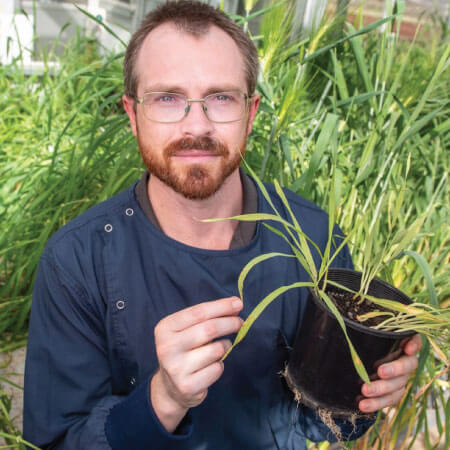
Dr Sadegh Balotf
Research Fellow, Plant Pathology, University of Southern Queensland
B3.1: Co-infection assays to study synergistic and antagonistic interactions
Originally from Iran, Sadegh is a Research Fellow at the University of Southern Queensland (UniSQ). His research career in Australia began at Murdoch University, where he worked as a visiting researcher from 2016 to 2018 while completing his first PhD on nitrogen use efficiency in wheat. Sadegh later undertook a second PhD at the University of Tasmania, focusing on powdery scab disease of potato, which he completed in 2022.
Following this, Sadegh joined UniSQ's Centre for Crop Health to continue research in plant pathology and to contribute to a broad portfolio of projects. His work includes genome analysis of crop pathogens, investigations into fungicide resistance in fungal populations, and studies of molecular interactions between plants and pathogens. In 2024, with the launch of the Australian Cotton Disease Collaboration (the ACDC), Sadegh was appointed as a Research Fellow to lead a project examining pathogen co‑infections and disease complexes in cotton.
Having worked across multiple crops, Sadegh values the opportunity to contribute to the Australian cotton industry, which he regards as innovative, collaborative, and strongly science‑driven. He is motivated by the industry’s commitment to evidence‑based solutions, long‑term sustainability, and grower success.
Outside of research, Sadegh is a passionate football enthusiast who enjoys both playing and watching the sport, and he also enjoys gardening, which complements his professional interests.