From breakthroughs in clean energy and advanced manufacturing to international recognition, the University of Southern Queensland (UniSQ) continues to strengthen its research performance and impact.
UniSQ researchers have secured major competitive grants, advanced industry partnerships and achieved strong results across key research performance measures in 2026, reflecting the University's commitment to addressing challenges facing communities, industries and the environment.
Research performance continues to strengthen
UniSQ recorded approximately $30.74 million in research income as at the end of September 2026, including $19.73 million from Australian competitive grants. The figures are preliminary and include approximately $30.12 million in unaudited research income reportable under the Higher Education Research Data Collection.
The University has also demonstrated strong performance in research publications and international impact.
As at 4 October, UniSQ had 1,485 research papers indexed for 2026, with 80.9 per cent published in top-quartile (Q1) journals, up from 77.5 per cent in 2025 and above the University's long-term average of 73.7 per cent.
Almost half (48.5 per cent) were published in the top 10 per cent of journals, compared with 44.3 per cent in 2025.
UniSQ's Field-Weighted Citation Impact, a measure of how frequently research is cited relative to the global average, reached 2.01 for 2026 to date, compared with 1.68 in 2025.
More than 50 UniSQ-affiliated researchers also featured in the latest Stanford/Elsevier World's Top 2% Scientists list, including more than 20 ranked among the world's top 100,000 researchers and within the top one per cent of their main research subfield.
Major fellowships driving future technologies
Two UniSQ researchers have secured prestigious Australian Research Council (ARC) Future Fellowships, each valued at $1.33 million, to advance research with significant potential benefits for Australian industry and communities.
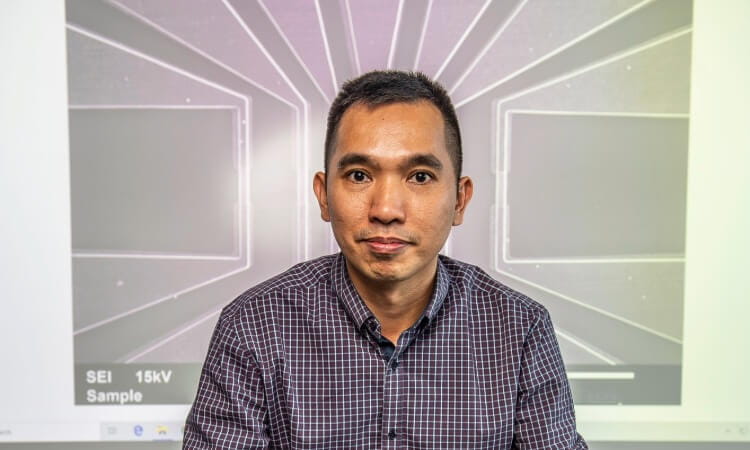
Associate Professor Toan Dinh is developing next-generation wearable sensors capable of operating in extreme environments, including high temperatures and conditions involving sweat and corrosion. The technology could improve health and safety monitoring for workers in demanding conditions.
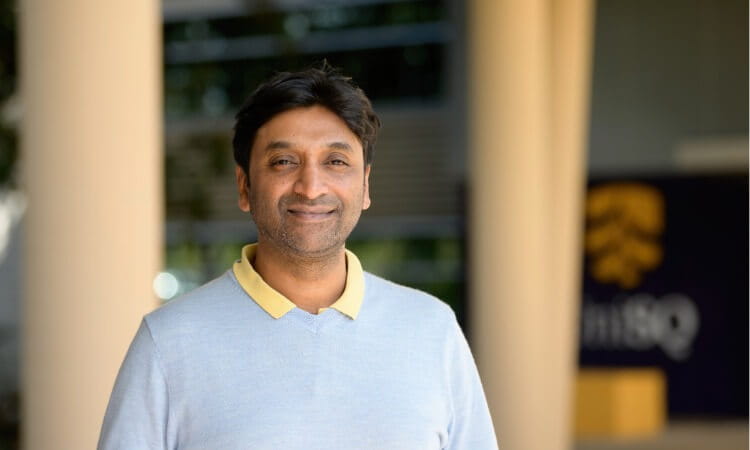
Professor Ashok Nanjundan is developing self-healing materials for next-generation sodium-ion batteries. By combining advanced graphene materials with flexible polymers, his research aims to create battery electrodes capable of repairing damage during use, potentially extending battery life and improving the reliability and sustainability of energy storage technologies.
Together, the fellowships represent more than $2.6 million in competitive funding and strengthen UniSQ's capabilities in advanced materials and emerging technologies.
Research funding supporting real-world solutions
UniSQ researchers have also secured funding for projects addressing challenges in housing, clean energy workforce development and national security.
Associate Professor Wahid Ferdous received $100,000 through the Queensland Government's Regional University Industry Collaboration program, delivered by CSIRO, to develop low-cost, rapidly constructed housing solutions in partnership with Epicrete Technology. The research aims to support communities displaced by natural disasters, including cyclones, floods, earthquakes and bushfires.
Dr Alamgir Hossain, Professor Belal Yousif and Professor Ravinesh Deo secured $200,000 through the TAFE Centre of Excellence Clean Energy Batteries program. Working with TAFE Queensland, they are developing Pathway Navigator, an AI-enabled tool to help trade-qualified workers transition into higher education and advanced technical careers in the clean energy sector.
Dr Ekta Sharma and her team were awarded $364,974 through the Office of National Intelligence's National Intelligence Postdoctoral Grant program. As Lead Research Advisor, Dr Sharma will oversee research exploring how artificial intelligence can help address climate and health security risks and strengthen Australia's resilience.
It marks Dr Sharma's second success in the highly competitive scheme, which has an approximate national success rate of four per cent.
Advancing Australia's space and manufacturing capabilities
UniSQ's Institute for Space, Defence and Advanced Technology continues to strengthen Australia's sovereign capability through research, industry partnerships and international collaboration.
Through the UniSQ-led iLAuNCH Trailblazer, a collaboration with Starke AMG and Adelaide University has established specialised Australian Electron Beam Melting capability for space and defence manufacturing.
The initiative generated more than $101,000 in first-year sales revenue, secured 11 new customers and supported more than 6,000 hours of industry-based training and work experience.
UniSQ's Hypersonics and Rocketry Group also contributed to the successful MAPHEUS-17 sounding rocket launch, marking the third flight of the German-Australian Flight Experiment (GAsFEx-3).
Led by Professor Ingo Jahn, with contributions from Professor David Buttsworth and Dr Byrenn Birch, the project is generating flight-test data to advance Australia's hypersonics research capability.
Centre for Future Materials researchers Dr Sachini Wickramasinghe and Professor Allan Manalo, together with PhD student Ada Adawiyah, also led workshops in Indonesia exploring the use of 3D-printed recycled plastics to build climate-resilient communities.
Supported by the Australia-Indonesia Institute, the activities attracted more than 170 participants and strengthened international research and industry connections.
Celebrating research excellence
UniSQ researchers and students have received recognition across a range of disciplines, reflecting the depth of talent and expertise across the University.
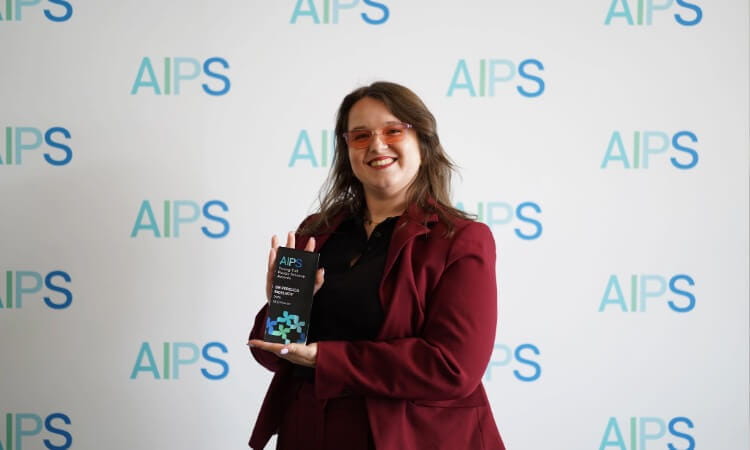
Dr Rebecca McElroy, a UniSQ Vice-Chancellor's Postdoctoral Research Fellow for Women in STEMM, received a 2026 Queensland Young Tall Poppy Award for her research into galaxy evolution and commitment to science communication.
UniSQ PhD student Siri Rattanaamporn was awarded a 2026 RISE Fellowship from the Australian Composites Manufacturing CRC, recognising her potential as an emerging leader in science and engineering.
Professor Elizabeth Cardell, Head of School and Dean (Health, Psychological and Medical Sciences), was named a Fellow of Speech Pathology Australia, one of the profession's highest honours.
Professor Jeff Dunn AO, UniSQ Chair of Cancer Survivorship, was appointed Chair of the Translational Research Institute Board, commencing in 2027.
Three members of UniSQ's Technical Services and Operations team – Dr Choman Salih, Dr Mazhar Peerzada and Dr Hizam Rusmi – were recognised as finalists in the inaugural Research Infrastructure Queensland Alliance Technical Excellence Awards.
The University's emerging researchers were also celebrated through the 2026 Three Minute Thesis competition, with Tarynn Potter taking first place, Jessica Elliot finishing second and Ranaweera Arachchige Perera receiving the People's Choice Award.
The competition attracted almost 9,000 views, showcasing the diversity and potential of UniSQ's next generation of researchers.
Connecting research with communities
UniSQ Research Week 2026 brought together researchers, students, industry partners and community members through 22 events across the University's campuses and online during National Science Week in August.
The program featured research showcases, facility tours, panel discussions and Higher Degree by Research presentations, providing opportunities to explore research addressing local, national and global challenges.
Among the highlights was Astronomy in the Park, which attracted approximately 900 visitors for hands-on astronomy experiences and opportunities to engage with UniSQ researchers.
As UniSQ develops its next five-year Research Plan, the University's growing research performance, industry partnerships and international recognition provide a strong foundation for continued progress.
Together, these achievements demonstrate how UniSQ research is advancing knowledge, supporting Australian industry and delivering practical benefits for communities.
Explore the Spotlighting Our Research: July 2026 edition.