In the red dust and wide-open skies of South West Queensland, Quilpie is home to just over 500 people. It's the kind of town where everyone knows your name, neighbours become family and community is at the heart of everyday life.
Growing up in this close-knit town, Ashleigh Wharton has always been woven into its fabric and knew from an early age that she wanted to stay.
A proud Wangkumarra woman, she was determined to stay connected to Country, remain close to family and one day care for the people who had watched her grow up.
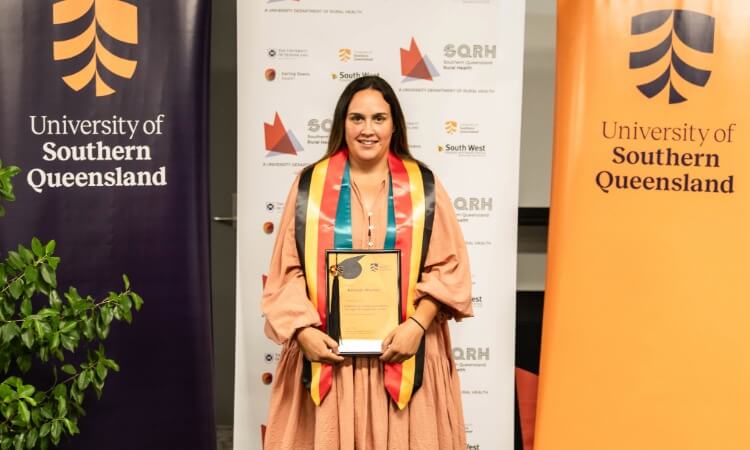
Through UniSQ's End to End Bachelor of Nursing (Charleville) program, she was able to complete her nursing degree while remaining in Quilpie.
Now a Registered Nurse at Quilpie Multipurpose Health Service (MPHS), she’s giving back to her community in the way she always imagined by caring for familiar faces, supporting the people she loves and honouring the strength, stories and resilience passed down through generations.
Ahead of this year's NAIDOC Week, we spoke with Ashleigh about her journey, what her culture means to her, and her hopes for the future of healthcare in regional and remote communities.
When you look back on your journey from starting university to graduating as a nurse, what emotions come to mind?
When I look back on my journey, I feel incredibly proud, grateful and relieved. Balancing university, work, family and life in a remote community was challenging at times, but it has all been worth it. There were moments of self-doubt, but I kept reminding myself why I started. Graduating as a nurse is something I am extremely proud of, and it has shown me that with determination, resilience and support, anything is possible.
As a proud Wangkumarra woman, how has your culture shaped the person you are today and the nurse you aspire to be?
Being a proud Wangkumarra woman has shaped every part of who I am. It has taught me the importance of respect, connection, family and community. These values guide the way I interact with people and the type of nurse I want to be. I aspire to provide culturally safe, compassionate and respectful care, while also advocating for First Nations people and helping to build trust within our healthcare system.
What does NAIDOC Week mean to you, and how has its significance evolved throughout your life?
NAIDOC Week is a time of celebration, reflection and pride. As I’ve grown older, I have developed an even deeper appreciation for its significance. It is an opportunity to celebrate the achievements, resilience and contributions of First Nations peoples, while also acknowledging the journeys and challenges that have shaped our communities.
Why is it important to celebrate NAIDOC Week and create opportunities for First Nations people to share their stories, achievements and aspirations?
It is important because stories create understanding and connection. Celebrating NAIDOC Week gives First Nations people a platform to share their voices, experiences and successes. It helps educate others, challenges misconceptions and inspires future generations to be proud of who they are and what they can achieve.
You completed your degree through UniSQ’s End to End Bachelor of Nursing (Charleville) program while continuing to live and work in Quilpie. How important was it for you to remain connected to your community while completing your studies?
Remaining in Quilpie while studying was incredibly important to me. Staying connected to my community meant I could continue supporting local people, maintain my family and community connections, and apply my learning in a real-world setting. Living and working in a remote area also reinforced my passion for improving healthcare access and outcomes for regional and remote communities.
This year’s NAIDOC Week theme is ‘50 Years of Deadly’ and celebrates strength, vision and legacy. What does this mean to you?
To me, ‘50 Years of Deadly’ represents the strength and resilience of those who came before us and the legacy they have created for future generations. It reminds me that we all have a responsibility to continue building opportunities for our communities and to celebrate how far we have come while looking ahead with hope and determination.
Can you tell us a bit about your goals for the future? Are there particular areas of nursing, health or community service that you’re passionate about pursuing?
One of my biggest goals for the future is to become an Indigenous palliative care advocate. I am passionate about supporting people and their families during some of the most difficult times in their lives. I want to help make their journey a little easier, ensuring they feel heard, respected and culturally safe throughout their care.
I hope to be someone who can walk alongside patients and their families, offering support, compassion and understanding while advocating for their needs and wishes. I believe everyone deserves dignity, comfort and quality care, and I want to play a role in helping people navigate that journey in a way that is meaningful to them.
Alongside this, I want to continue developing my nursing skills and experience while making a positive impact in rural and remote communities. I also hope to inspire young First Nations people to pursue careers in healthcare and show them that their culture, knowledge and lived experiences are valuable strengths within the profession.
How do you hope to use your qualification and experience to make a difference in regional and remote communities?
I hope to provide quality healthcare close to home and help reduce some of the barriers that people in regional and remote communities experience. As an aspiring Indigenous palliative care advocate, I want to ensure people feel supported throughout every stage of their healthcare journey, especially during end-of-life care.
I want to build strong relationships with patients and their families, advocate for culturally safe care, and support people through some of life’s most challenging moments. If I can help make even one person’s journey a little easier and provide comfort during a difficult time, then I know I am making a difference.
What does it mean to you to now be working as a Registered Nurse in Quilpie, and how has the support you’ve received shaped your journey?
I feel incredibly privileged to work at the Quilpie Multipurpose Health Service (MPHS) in such a beautiful little community. We are incredibly fortunate to have one of the most supportive managers, Jenna Nunn. She has brought our hospital and the wider community together, creating an environment where everyone feels like one big family. Jenna is always there to support her staff every step of the way, has our backs no matter what, and continually encourages us to grow, improve, and be the best we can be. Her leadership has made a real difference to both our workplace and our community.
Many of the people I now care for have watched me grow into the person I am today, and I feel that one of the best ways I can give back is by caring for them and supporting them through their healthcare journeys.
I am grateful to UniSQ, my family, colleagues and my community for the support they have given me throughout my studies. Their encouragement helped me reach this milestone, and I hope my story encourages others, particularly First Nations students from regional and remote communities, to believe in themselves and pursue their goals.
Studying while living in a remote community can be challenging, but it is possible. I believe our communities benefit greatly when local people are empowered to gain skills, return home and use their knowledge to make a positive difference where it matters most.