GutGutGoose founders heading to Silicon Valley after Y Combinator acceptance
5 min read
16 Jun 2026
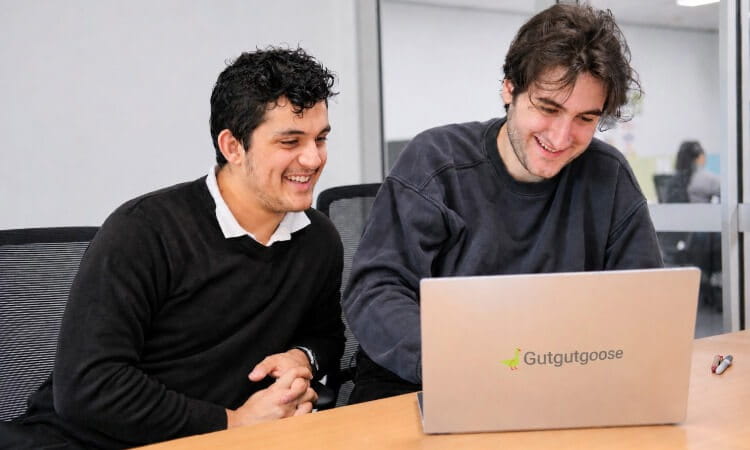
Brisbane university students Anis Mihrshahi and Leon Mojarrabi are preparing to relocate to Silicon Valley after being accepted into Y Combinator, the startup accelerator that backed Airbnb, Dropbox, and OpenAI.
Mihrshahi, 20, studies at UniSQ, while Mojarrabi, 23, studies at Griffith University.
The childhood friends co-founded biotech startup GutGutGoose, which focuses on personalised probiotics and microbiome data to support more personalised approaches to healthcare.
In this Q&A, the pair discusses the origins of GutGutGoose, the science behind the company, and what comes next as they prepare for the next stage of growth in Silicon Valley.
For those hearing about GutGutGoose for the first time, what problem are you trying to solve, and why does it matter?
Leon: The gut microbiome is now linked to chronic disease, immune function, and mental health across hundreds of peer-reviewed studies, but many of the products currently sold in the probiotic market don’t work particularly well for most people. We’re building a more personalised approach based on an individual’s microbiome rather than a one-size-fits-all product.
How did the idea for GutGutGoose come about, and at what point did you realise you might be on to something? Can you explain the company name?
Anis: It started with reading the microbiome literature and noticing that the consumer category was selling something the science had already said didn't work. We tried to build the prediction engine ourselves. We approached a senior researcher in the field for guidance, and they told us, very politely, that what we'd built was wrong. With their guidance, we hit the drawing board. What clicked was that this isn't AI for the sake of AI, which is what a lot of companies in this space are doing. The answer is treating an ecosystem like an algorithm: the maths has to respect how strains actually compete, cooperate, and colonise inside the gut. The moment that insight landed and the predictions started lining up with published clinical results, we knew we had a company. The name was an accident. I was scrolling through domain names, reading out loud. “Gut… gut… gut…” and someone yelled “goose”. That was it.
Where is the company currently in terms of product development, customer interest, and the upcoming beta phase?
Leon: The science took us two years. The selling took us five phone calls. The prediction engine is now validated across two independent clinical studies. The catalogue is 16 strains, all TGA-licensed, with a provisional patent. That's the slow, careful work. The night before our YC interview, Anis and I just started calling people. A few days later, our beta phase is almost full.
You've described the company as being about more than probiotics. Can you explain the importance of the microbiome data you’re collecting?
Anis: From the outside, it looks like we’re developing personalised probiotics, but internally we’re also building a longitudinal microbiome dataset that tracks what happens before and after interventions over time. The gut shapes everything. The science on that part is settled. AI is supposed to tell us what to do about it, but AI is only as good as the data it learns from, and that data barely exists. A paper this year stitched together 168,000 gut microbiome samples. Almost none captured what happened after someone intervened. They're snapshots. You can't train a model on snapshots to predict what changes when you act. Every GutGutGoose customer fills the gap: a before-state, a defined intervention, a verified after-state. Nobody else is generating this kind of data at consumer scale.
What was your reaction when you found out GutGutGoose had been accepted into Y Combinator?
Leon: When we got the call, Anis started screaming and jumping around. It was something to see. Our families have been incredibly proud and supportive. My dad didn't even know what YC was, but when we explained, he was overjoyed. YC received over 80,000 applications this year and accepted around 200.
What does the Y Combinator process involve?
Leon: YC accepts roughly 0.3% of applicants. Honestly, the funding is only one part of it. The bigger value is spending three months in San Francisco surrounded by experienced founders, investors, and mentors who have helped scale some of the world’s biggest technology companies.
Gut health can attract a lot of hype. How are you approaching the science carefully and making sure claims are evidence-based?
Anis: We’re building the company around measurable outcomes. Customers send us a stool sample, we analyse their microbiome, and we build a formulation matched to both their gut profile and what they’re trying to improve. Then we re-test later so they can actually see what changed. You know your body better than any product does. Our job is to give you the data, the tools, and a product matched to what you actually want.
You and Leon have known each other since childhood. How has that relationship shaped the company?
Anis: The value of a long friendship isn't just trust; it's the practice. We’ve built the resilience to resolve conflicts easily, and our communication has gotten really good over the years. We complement each other in ways we’ve had years to notice. You can see it on the camping trips we go on with our friends. Leon's the one getting good deals on places and sorting out logistics. I'm the one getting everyone on board. Same pattern at the company.
Looking ahead, what do you hope to achieve during YC and beyond?
Leon: One of the big goals during the YC program is proving the data side of the business through real customer outcomes at a larger scale.
Long term, we want to build a dataset that helps improve understanding of how the microbiome changes over time and how that relates to health. Success for us would be giving people better visibility into what’s happening inside their own gut and helping move healthcare towards more personalised and preventative approaches. We want someone to be able to walk into a clinic with a gut concern and get shown their own data, instead of being told it's stress.
Related news
3 min read
29 Sep 2026
2 min read
25 Sep 2026
3 min read
21 Sep 2026
Tags