From artificial intelligence and automation to evolving skills pathways and lifelong learning, the future of work is no longer a distant conversation; it is already reshaping industries, communities, and education systems across the country.
Australia is grappling with workforce shortages, technological disruption, and changing expectations around careers and education.
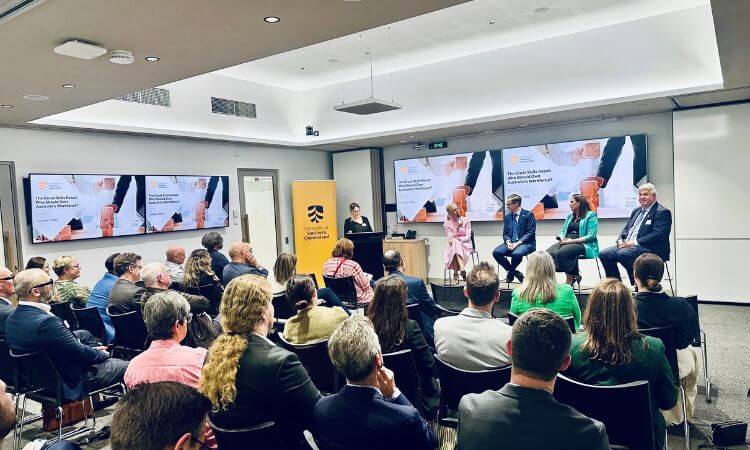
Those issues formed the focus of the latest UniSQ Thought Leadership Series event – The Great Skills Reset: Who Should Own Australia’s Workforce? – which brought together industry leaders, educators, alumni and community members at UniSQ Brisbane last night.
Moderated by UniSQ Director (Support for Learning) Dr Ali Jaquet, the panel featured UniSQ Vice-Chancellor and President Professor Paul Mazerolle, TAFE Queensland CEO Tim Rawlings, Australian Industry Group Queensland Head Michelle Farquhar, and Luminary Partners Managing Partner HR Advisory Megan Mailman.
The discussion explored how responsibility for workforce development is increasingly shared across universities, vocational education, industry, and government, particularly as technological disruption reshapes jobs, career pathways, and skills needs across the economy.
Panellists examined the importance of stronger alignment between education and employment, more flexible pathways between vocational and higher education, and the growing need for lifelong learning and mid-career reskilling.
The discussion examined the broader transformation underway across industries and communities, including the impact of artificial intelligence, automation, and digital disruption on the nature of work itself.
One of the key points that came out of the technology-driven developments was the importance of soft skills. Several panellists emphasised the need for skills like critical thinking not to be lost as AI makes its mark on the workforce.
It was made clear that workforce development cannot sit with any one part of the system alone.
The event reinforced UniSQ’s growing role as a convener of public conversations through the Thought Leadership Series, which connects academic expertise with industry and community insights on issues shaping society today.