Brisbane poet's powerful poem about the objectification of women earns national recognition
4 min read
27 Nov 2026
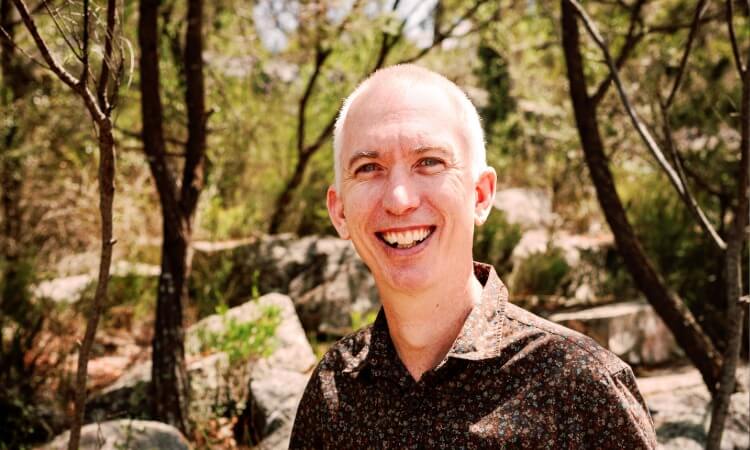
Brisbane poet Damen O’Brien has won the University of Southern Queensland’s (UniSQ) 2026 Bruce Dawe National Poetry Prize for a confronting poem examining the objectification of women and the desire to be seen beyond their physical appearance.
Mr O’Brien’s poem, Lovely in Her Bones, was selected from more than 1,600 entries in this year’s competition, one of the largest fields in the prize’s history.
The judging panel also recognised Younes Chahine’s The Final Frost and Karys McEwen’s The Other One, awarding both poems Highly Commended honours.
Prize chair and UniSQ Professor Laurie Johnson said the standard of entries was extremely high, with many poets responding to significant contemporary issues, including artificial intelligence, global health concerns, threats to democracy and the climate crisis.
However, the judges were particularly struck by Mr O’Brien’s exploration of the longstanding issue of women being objectified.
“Damen O’Brien’s Lovely in Her Bones takes the idea of describing a woman’s beauty through language and extends it into an examination of what happens when a woman is reduced to her physical features,” Professor Johnson said.
“By giving the female subject this agency, the poem refuses to leave the woman reduced to the sum of her parts, but brings the reader back to the woman’s own desire to be seen, while also being in control of her own body, inside and out.”
Named in honour of renowned Australian poet Bruce Dawe AO, the prize holds particular significance for Mr O’Brien, who grew up reading Mr Dawe’s poetry.
“I have always loved Bruce’s poetry and read Sometimes Gladness many times when I was young,” Mr O’Brien said.
“As a teen I corresponded a few times with him at the urging of my father, writing naive letters about my thoughts on poetry, and he was gracious enough to respond seriously and with encouragement.”
Mr O’Brien said the poem began with a confronting image that developed as he explored the ideas behind it.
“I began with an image of someone taking off their own skin and then at some point in writing the poem I asked myself why they were doing it? What brought them to such a brutal course of action?”
He said the poem brought together ideas he had been thinking about for some time.
“I have been thinking a lot about gendered violence, aggressive masculinity and men who treat women like objects. The two thoughts came together,” he said.
Mr O’Brien has previously received several major poetry accolades, including the Peter Porter Poetry Prize and The Moth Poetry Prize.
He said it was rewarding to have his work recognised, particularly given the challenges of getting published.
“It is nice to be read and even nicer to know that my poems meant something to someone,” he said.
Content warning: The following poem contains graphic imagery of bodily harm and explores themes of gendered violence.
Lovely in Her Bones
By Damen O’Brien
He used to say he liked the way she walked, the shape
of her legs, the way she wore her bones; lovely, the way
a man might appraise an artwork, might talk to the boys
of a sculpture or other thing he owns – come let us knock
our hips together, insistent, urgent, wheedling like an itch,
until she scratched away the touch of him so hard under
one eye the welt unzipped down her check, uncovered
the smooth fields of muscle, the white ravels of tendons,
until she worked at the wound, the seam of her jaw
hinging and loose, the slipped scalp sloughing down,
like the doff of a cap, she twitched at the tear, shoulder,
unstrapped, arm sleeved and rolled in red folds, hands
pulled and ungloved, un-mounding, unstitching the soft
paling flesh, the unleavened bread, dropping her breasts
like slack bags of hunger, her nails ripe and tacky,
she picked at the pockets and belt of her belly, paring
and coring, parting the sheaves of her hips and labia,
grim lipped, flailed, discarded, digging and niggling
at the itch in her blood, that uneasy feeling, buttocks
unsaddled, thighs slack and slippery, until she could
step from the suit of her living, pulling and tugging
at the ball, block and toenail at the last end of her foot,
until she could unveil the architecture of her body, raw
map and design, pulsing and plain, on the hard hanger
of her bones, original diagram of her veins: now you
can see me, now you can see me, flayed like the flower,
she loves me, she loves me not, peeled, stripped, stigma,
style, ovary, the innocent ossuary, the red red blood.
Related news
2 min read
25 Nov 2026
2 min read
20 Nov 2026

3 min read
19 Nov 2026