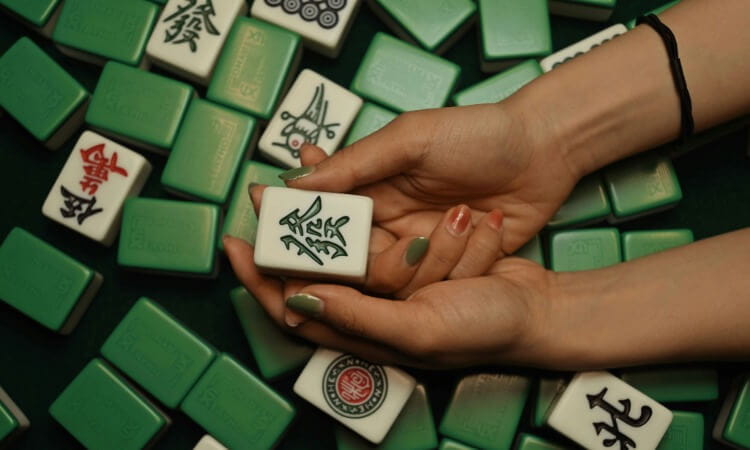
Mahjong is having a global moment. From designer tile sets and “mahjong parties” to growing numbers of clubs and classes, the centuries-old Chinese tile game is becoming trendy once again.
But its resurgence raises questions about cultural exchange, commercialisation, and what happens when a tradition rooted in Chinese history becomes a “lifestyle trend”.
From China to the rest of the world
Mahjong emerged in eastern coastal China in the mid 1800s, towards the end of the Qing Dynasty. Although its exact origins are debated, historians agree the game developed from earlier Chinese tile-based games.
In the early 1900s, mahjong spread across China and internationally, including to the United States, France and the United Kingdom.
Annelise Heinz, historian of modern America, explains how American businesses marketed the game as an exotic Chinese novelty, often using Orientalist imagery in related advertisements and media.
American companies such as Abercrombie & Fitch helped commercialise mahjong. But Heinz argues their success depended on Chinese manufacturing, commercial networks and cultural expertise. Chinese merchants and community members imported and sold mahjong sets, and taught many white Americans how to play – yet their contributions are often overlooked.
How it works
Mahjong traditionally involves four players drawing and discarding from 144 tiles to create winning combinations. Strategy, probability, memory and your ability to read your opponents all play a role. The social experience is also equally important.
Today, there are more than 40 iterations of mahjong played globally, with different versions having different rules and varying numbers of players and tiles. Chinese variants such as the Cantonese and Hong Kong styles differ from other versions such as Japanese riichi mahjong.
One of the most distinctive adaptations is American Mah Jongg. Developed in the 1920s, this version has its own rules, and a number of joker tiles that don’t exist in the original version. The spelling “Mah Jongg” reflects the commercial branding adopted during the American mahjong boom. This game was eventually standardised by the National Mah Jongg League.
In the US, the current revival is centred largely on American Mah Jongg, while in Australia newer clubs such as Lucky Tiles are introducing players to the Hong Kong style.
Cultural and historical significance
In China, the history of mahjong has reflected broader shifts in society. During the late Qing and republican periods (1912–49) the game moved from male-dominated gambling spaces such as teahouses and brothels into bourgeois homes and parlours. It became increasingly associated with women’s social lives, reflecting changing gender roles and attitudes towards leisure.
But mahjong has not always been viewed positively in China. Critics at different points in history have associated it with gambling or excessive leisure, with increased anxieties as the game became popular with women.
Yet such criticisms have not diminished the game’s cultural significance. In many Chinese households, mahjong is woven into Lunar New Year celebrations and everyday socialising.
Outside China, mahjong helps Chinese diaspora maintain their cultural identity. Playing together also creates a shared space for community and connection, including across generations.
Why is mahjong booming now?
Google data shows rising search interest in “mahjong” and related terms, with media coverage also reflecting the game’s soaring popularity.
This resurgence reflects a number of overlapping trends. Many people are seeking offline activities that provide genuine social connection, particularly following the pandemic.
Social media and pop culture have also changed how the game is viewed, with many sources crediting the current revival to the popular 2018 film Crazy Rich Asians.
Boutique brands and influencers have turned mahjong into a lifestyle trend, promoting fashionable game nights, in what might be viewed as an extension of the “Chinamaxxing” trend.
Appreciation or appropriation?
Mahjong’s commercial growth has prompted debate about cultural appropriation. This tension is not new.
During the 1920s American mahjong craze, the game became fashionable among affluent white American women, who embraced what Heinz describes an Orientalist “feminine exoticism”. This involved using Chinese-inspired dress and language to perform an imagined version of Chinese culture.
Ironically, this enthusiasm coincided with escalating anti-Asian prejudice and immigration restrictions in the US.
Philosopher James Young argues cultural borrowing is a normal feature of human societies, and is not automatically unethical. The more important question is how cultural practices are adopted. Are their origins acknowledged? And does the “borrowing” cause harm to the communities they come from?
In her essay Eating the Other, the late American cultural critic bell hooks cautions against treating culture as an aesthetic object detached from its history. This tension came into focus in a 2021 controversy, when Dallas-based company The Mahjong Line marketed sets with the traditional Chinese riles replaced with English words and Western symbols.
There is also the question of who benefits financially from the mahjong comeback.
Another Dallas-based company Oh My Mahjong, founded in 2022 by Megan Trottier, reported more than US$30 million revenue in 2025. Meanwhile, luxury houses such as Hermès are selling mahjong sets for tens of thousands of dollars, showing how the culturally significant game has been turned into a lucrative commodity.
The challenge moving forward will be ensuring mahjong’s growing popularity remains connected to the Chinese communities and histories that shaped it. Those communities should also have a meaningful say in its future.
The article has been republished from The Conversation under the Creative Commons license. Read the original article.