UniSQ awarded funding for three industry research projects
2 min read
21 Jan 2026
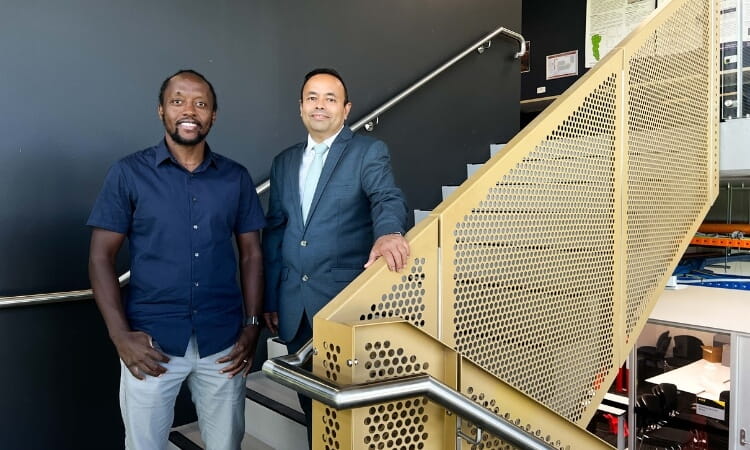
The University of Southern Queensland (UniSQ) has secured funding for three new industry-partnered projects tackling challenges in wastewater management, waste transport logistics, and space technology.
The projects are supported through round six of the Australian Government’s National Industry PhD Program, which enables researchers to work on real-world research in collaboration with industry partners.
Dr Sreeni Chadalavada will work with Toowoomba Regional Council (TRC) to develop a new approach to predicting and managing the impacts of climate change on the city’s sewer system.
“As climate change and population growth put increasing pressure on regional sewer systems, our infrastructure is struggling to keep up,” Dr Chadalavada said.
“Droughts, soil movement and ageing pipes are causing cracks and leaks that allow tree roots and groundwater to infiltrate the network.
“Our project will develop a model that uses sensors, cameras and artificial intelligence to predict and reduce climate-related impacts on sewer systems, helping to detect problems early, cut operating costs and delay expensive upgrades.
“By improving infrastructure resilience, we can prevent sewage overflows, lower health risks and strengthen trust in essential public services.”
Dr Francis Gacenga, an expert in applied information systems, and Professor Ravinesh Deo, an expert in artificial intelligence (AI), will collaborate with Sida4 Impact (Asia Pacific) and Dovetale Sport to develop a universal AI-powered modelling framework that integrates quantum computing methods to optimise waste transport logistics.
“Waste transport companies face significant challenges in planning efficient routes and services due to complex factors such as traffic, waste volume, service frequency, and environmental constraints,” Dr Gacenga said.
“These inefficiencies lead to higher operational costs, unreliable service delivery, and increased carbon emissions.
Professor Deo added: “Our quantum-inspired model will use advanced AI algorithms enhanced by quantum computing to process vast and complex datasets in real time.
“It will simulate and recommend optimal routing strategies based on dynamic conditions – reducing fuel consumption, improving service reliability, and enabling more sustainable operations.”
The project aligns with UniSQ’s recent quantum leap into advanced technologies, including the development of Australia’s first industry-accessible cryogenic electronics measurement facility at its Springfield campus.
The final project will advance Australia’s space imaging capability. Professor Duncan Wright will lead a UniSQ research team to modify a payload sensor integrated with High Earth Orbit Robotics’ imaging system to capture high-resolution images for non-Earth and astronomy research.
The project is part of a $50 million satellite initiative launched in July, bringing together UniSQ, its iLAuNCH Trailblazer program, and an Optus-led consortium to build, launch, and operate a sovereign Australian low Earth orbit (LEO) satellite.
Related news
2 min read
16 Sep 2026
2 min read
16 Sep 2026
2 min read
16 Sep 2026
Tags