Dr Pamela Farrell’s journey from UniSQ graduate to internationally recognised education and community leader reached a major milestone in 2025, when she was named one of Canada’s Most Powerful Women (Top 100) by the Women’s Executive Network.
Now based in Canada, Dr Farrell’s career spans education, community leadership, and social advocacy.
She also received two further honours last year: the Tentanda Via Award from York University and the Arch Award for Community Commitment from the University of Calgary, recognising her impact across education and community engagement.
The UniSQ alumnus credits her early studies with shaping a career focused on equity, partnership, and meaningful social change.
We spoke with Dr Farrell about her recent achievements, the UniSQ experiences that shaped her path, and what lies ahead in her work to create positive social change.
Congratulations on a huge 2025! What do these accolades mean to you personally and professionally?
I’m incredibly humbled to receive these recognitions. They are meaningful to me not as personal achievements, but as reflections and results of the collective work I have been privileged to be part of. Much of what I do is shaped by students, colleagues, and community members who generously share their trust, their stories, and their time and labour. These moments simply remind me why this work matters and encourage me to keep showing up, listening, and learning.
What inspired you to found GROW, and how has it evolved since 2019?
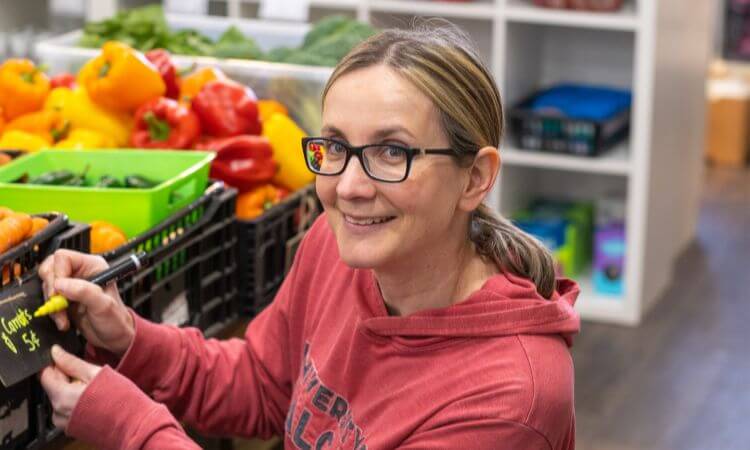
I was inspired to found GROW because I saw a huge need in our community with regard to healthy and affordable food access, and because traditional food charity models are not designed to address the root causes of food insecurity. The recent launch of our mobile market program, GROW-on-the-GO, is an extension of our market program and supports our mission to provide good food for all. Over the last six years, this work has continued to shape my understanding of education, community-engaged scholarship, and social equity. In particular, we continue to centre our members (clients) in all that we do; for example, food offerings or our mobile market stops are selected based on community input and careful considerations of the lived experiences of those who access our programs.
How have your UniSQ studies influenced your path and philosophy as an educator and community leader?
I often tell my students that studying education is an introspective journey. My time at UniSQ provided a space to reflect on how I was taught, where my strengths and growth edges lie, and how I engage with learners. Education is inherently reflective, and my Bachelor's and Master's degrees broadened my perspective from the classroom to society at large. My Master’s specialisation in Special Education was transformative. It equipped me to support students and adults with disabilities, both in classrooms and in the broader community, which provided the knowledge and tools to embed these practices into teacher training, shaping how new educators support diverse learners.
What key moments from your UniSQ experience do you still draw on today?
One course that stands out is Community Welfare and Development. It planted the seed for GROW by framing community engagement as a partnership rather than charity. Equally important was UniSQ's culture of support. Faculty and staff consistently provided encouragement and mentorship. This culture of appreciative leadership shaped the faculty member I am today.
With further study underway and multiple projects continuing, what’s next?
I am integrating tools from my degree at Harvard into my work at the University of Calgary and GROW, focusing on systemic change and higher education governance. I am exploring “new roads” where I can apply this global experience. There is still so much work to be done in education, equity, and community development.
What advice would you give to UniSQ alumni or students who aspire to make a global impact?
My biggest advice is to not be afraid to start something. If an idea keeps you awake at night, pursue it. When others said no, I said yes to the vision. Surround yourself with like-minded people and remember that progress comes from small, courageous steps. We have control over the narrative of our lives. If you believe in a model when others doubt it, you will find the courage to bring it to life. Persistence is the bridge between a “big idea” and a reality that elevates and serves the community.
Learn more about the growing network of more than 120,000 UniSQ alumni spread across 154 countries around the globe.