Meet Hemat: 2025 Bruce Dawe National Poetry Prize Winner
7 min read
22 Jan 2026
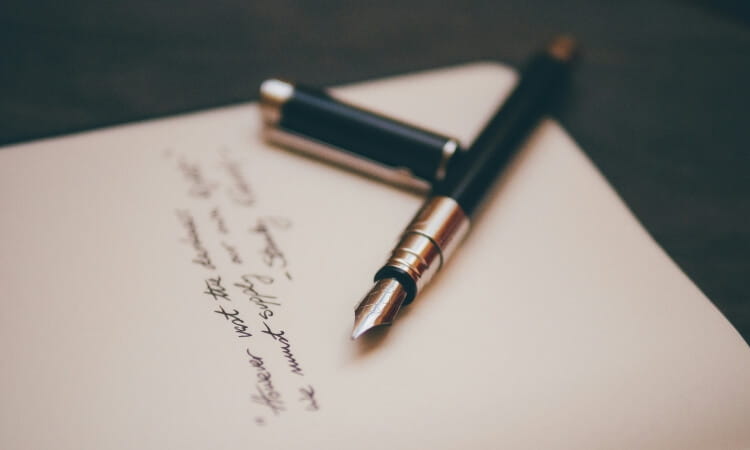
I Don’t Say My Name Right
Yes, I know it’s correctly
but hey, if I can’t say my name…
right?
An immigrant kid grows up funny her tongue
reaches for receding words her eyes
lower too low the edges
of her smile twitch
She gets real good at miming:
the walk, the hair-
flick, the laugh which buttons
to leave unbuttoned how to do
underdressed while filling her eyes with
every detail painting her face with
nonchalant
She hides her falafel roll in her
pocket scoffs it round a corner
kicking stones like there’s
nothing
in her mouth
sucking in her body
(to fit the air)
Most days the name thing doesn’t
matter It’s only when she meets
someone from the homeland and
stutters when telling who
she is
or finding herself with one
who’s travelled to
or learnt the language of
the place her feet emerged
Sometimes it’s just a person who
sees through
her redesigned ethnicity
(but too polite to say)
Some don’t mind saying though
or shading their eyes with their
knowing or saving up the titbit to share
with their too-loud friend
The colour wheel’s a scoundrel fixed
to stop where you don’t live tricks
you as it’s spinning
that it’s all one tone
Hemat Malak has always loved words.
It was writing poetry as a child. Reading as a young adult. Exploring spiritual writing years later – to make sense of the different seasons of life and all the twists and turns they bring.
Her first foray into the realm of poetry as an adult (after a break of over 45 years) was as successful as they come.
Tweak by tweak (and 42 iterations later), her first piece found its rhythm and became something so much more than just an idea on a page.
It became I Don’t Say My Name Right, the winner of the 2025 Bruce Dawe Poetry Prize – chosen from almost 1,000 entries.
If you’re interested in how Hemat’s work has evolved over the years, the story and inspiration behind her winning work, and what she’s got in the pipeline, this Q&A is worth reading.
What did winning the 2025 Bruce Dawe Poetry Prize mean to you?
I’m still stunned. I was with my daughter when the email arrived, and I had to ask her to read it to me because I couldn’t believe what it was saying. It’s so affirming to receive a place on a longlist or shortlist – but to actually win something as respected as the Bruce Dawe Poetry Prize is amazing! I’m floating and so grateful. It’s especially significant to me because of the stage I’m at in my poetry career.
What was the inspiration behind your work I Don’t Say My Name Right?
Two things mainly. I had recently met some people from Egypt, where I was born, and I was bemused hearing myself say my name the way they would expect to hear it. My family came to Australia in 1969, when I was just three, so the way I usually say Hemat is well and truly Australianised. The other inspiration (if you can call it that) was a not-so-nice interaction online. I had recently experienced what I’d have to call a racial attack (go back to where you came from, etc., etc.) on my local community Facebook page. It was a reaction to my name, rather than anything I’d written, and I hadn’t realised that element was so strong where I lived. It made me remember some experiences I’d had as a kid, and it changed something in me. The feelings have bubbled up in a couple of poems, including this piece.
How did the poem change from the first draft to the final version?
This was a very fresh poem – the first draft written at the end of October. I nibbled at it for a couple of weeks. I usually write one poem at a time and tweak it, reading it aloud over and over (there is often a low murmur coming from me haha). If I trust my Google Docs activity log, I tweaked it 42 times. Some of those edits were going backwards and forwards on word choices. Sound is really important to me, so some tweaks would have been to get that and the rhythm right. After it sounds right, a poem gets moved over to (Microsoft) Word and dressed up in a nicer font. Then I usually play with how it looks on the page.
Is there a line in the poem that you feel especially connected to?
The part I feel most connected to is the image of the colour wheel spinning in the last stanza (although my sister didn’t get that part). I feel the metaphor expresses my (occasional) feelings of injustice and the randomness of privilege.
What first drew you to poetry? Have you always loved the written word?
I loved writing poetry as a child – I remember Mrs Oliveiro, my Year 6 teacher at St Jerome’s Punchbowl, making me believe that I had a talent for poetry. I didn’t continue writing, though, and the books I read as a young adult were more in the new age and self-help genres. Aside from poetry, my only other writing was some spiritual writing 15 years ago when I was going through a divorce and looking for answers – I was trying to make sense of life as a single mum with two young children, one with additional needs.
What usually sparks a poem for you?
I often write in response to prompts, to keep up my writing practice. Otherwise, it’s when I feel a strong reaction to something that I reach for my phone and blurt lines into my notes app. Either way, the writing process usually takes me somewhere surprising – that’s when I know it’s working, when there’s some sort of discovery. My sisters are psychologists, so I probably shouldn’t say it’s better than therapy (but just between us, ok). I admit that I’ve written too many divorce poems – they keep demanding to come out, though!
What’s the best piece of writing advice you’ve ever received?
Just one?! That’s hard because I’ve learnt so much these past two years. My early poems suffered from good doses of melodrama – I’ve learnt to have a lighter touch, show more and tell less, and trust the reader. My wonderful mentor, Ali Whitelock, has taught me not to accept good enough and to question every line. And of course, read.
What’s next on the horizon for you? Have you got any pieces in the works?
There’s always a piece in the works. I’m so excited to have my first collection coming out this year with 5 Islands Press. Poetry is part of my life, so I’ll continue to mould whatever inspires me into poems. I can’t imagine living without it.
Is there anything else you’d like to add?
I’m so grateful to be here and be able to learn and improve. I’ve heard many writers speak of imposter syndrome – it’s real! I’ve felt it especially because I only returned to poetry (after childhood) a couple of years ago, so I’m in learning mode. I’ve taken some wonderful workshops, including an incredible one with Mark Tredinnick, where I discovered my love of formal poetry. I’ve also learnt so much by absorbing everything I can from the resources created by Rattle Poetry Magazine (I’m a Rattle fangirl, raving to anyone who’ll listen!). Another thing I’m grateful for is my involvement with WestWords. I was in their 2024 Academy and am now part of their growing community of writers. Writing is so solitary – I didn’t realise how rewarding it would be to be part of a community. The friendship and support of other writers has added so much to my life.
Related news
2 min read
3 Jun 2026
4 min read
7 May 2026
3 min read
19 Feb 2026