
2 WIN Educational Research Programs
What's 'Eat 2 WIN'?
Eat 2 WIN is a nutrition education research program designed to help student-athletes understand how proper nutrition and hydration can boost their health and performance. The program includes three interactive nutrition workshops, access to online nutrition modules, and hands-on cooking classroom activities, that teach the essentials of sports nutrition. Students learn how to fuel their body for training and competition, unpack the Athlete's Plate, and discover game-day nutrition and hydration strategies. Led by UniSQ sports nutrition experts, this program will empower students to feel confident in the kitchen, with easy to prepare nutritious meals that will keep them performing at their best.
- Module 1: Winning Nutrition
- Module 2: Fuelling Performance
- Module 3: Hydrate to Dominate
- Practical: Inside the Athlete’s Kitchen
'Eat 2 WIN' Research
Our previous research highlights that student-athletes, especially those from regional and rural areas, often have limited nutrition knowledge and hold several misconceptions. This highlights the importance of providing integrated nutrition education led by qualified professionals, which can greatly enhance their understanding and practices around nutrition. The Eat 2 WIN research aims to measure changes in student-athletes’ nutrition knowledge before and after targeted nutrition education, while also evaluating how well the educational components are received by the students.
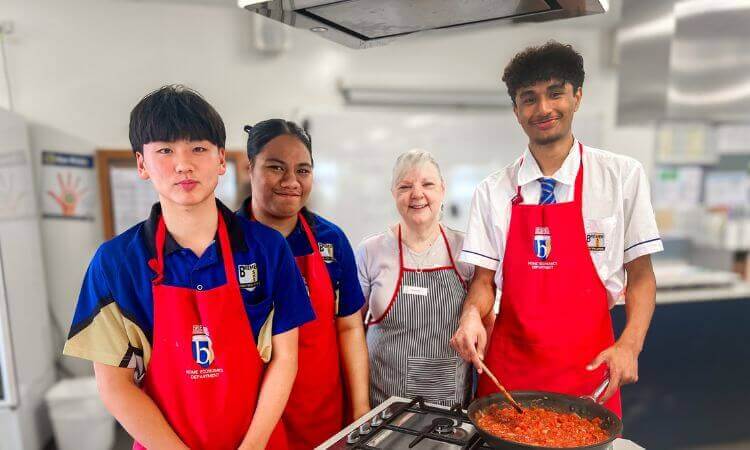
Professor Stephen Bird: Eat like a champion
"The Eat 2 WIN program offers student-athletes a unique educational opportunity to actively explore the critical role of nutrition in supporting their health and performance. A key component of the program is learning practical cooking skills, empowering students to feel confident in the kitchen."– Professor Stephen Bird
Contacts
For more information, contact Dr Andrea Fuller or Professor Stephen Bird.
What's 'Protect 2 WIN'?
‘Protect 2 WIN’ is a neck strength and concussion education program designed to help student-athletes reduce their risk of concussive events. The program focuses on targeted neck strength training and concussion education, equipping athletes with practical tools to enhance neck stability and manage concussion risks. Led by UniSQ strength and conditioning experts, the program aims to provide student-athletes with the training and knowledge to support their performance and safety on the field.
"Increased isometric neck strength has been associated with decreased head acceleration during impacts, highlighting the potential of neck training in reducing concussion risk." – (Daly et al., 2021)
Part 1: Neck Strong
The first part of the program focuses on enhancing neck strength and stability to reduce the potential for concussions. Athletes will participate in a tailored, evidence-based neck strengthening program, including:
- Initial Testing: Comprehensive neck strength assessments to evaluate isometric strength and head stabilisation.
- Training Plan: A 6-week neck strengthening regimen, designed to improve neck stability.
- Coach-Led Supervision: UniSQ will educate school strength coaches to ensure proper technique and maximise the program’s benefits.
Part 2: Neck Smart
The second part of the program provides athletes with neck strength and concussion education through interactive online modules, including:
- Module 1. Heads Up Concussion Awareness: Athletes learn to recognise the signs and symptoms of concussions and follow proper recovery protocols.
- Module 2. Neck Strength and Concussion Prevention: Discover the role neck strength plays in reducing concussion risks in contact sports.
- Module 3. Training Technique: Sport-specific tutorials on safe training techniques, such as tackling in rugby and heading in soccer.
‘Protect 2 WIN’ Research
Research suggests that strengthening neck muscles may reduce the severity of head injuries by stabilising the head during impact. The ‘Protect 2 WIN’ program is based on studies showing that athletes with stronger necks experience fewer and less severe concussions. This research component focuses on measuring the impact of neck strength training on concussion risk, evaluating how neck strength development influences injury prevention, and assessing student-athletes' knowledge of concussion risks.
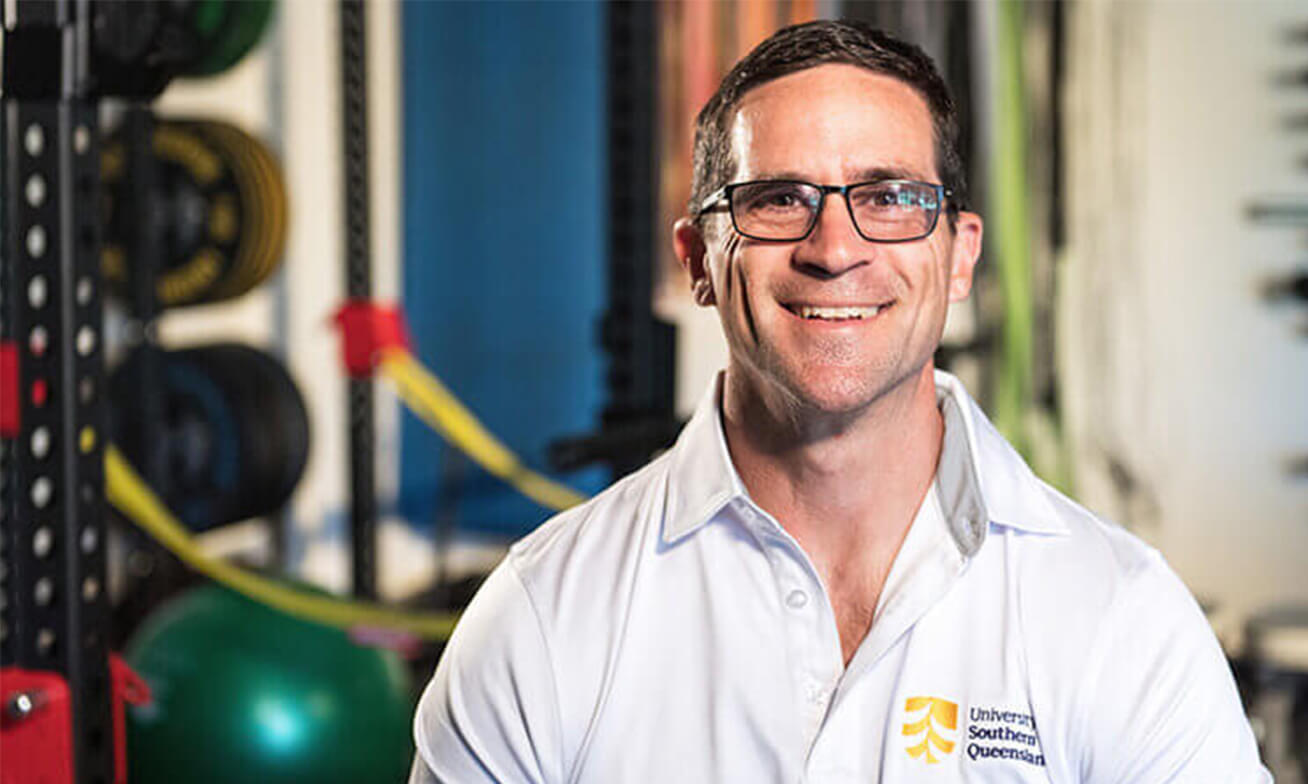
Dr Chris Gaviglio: Leading strength coach tackles new chapter
"The Protect 2 WIN program offers student-athletes a comprehensive approach to reducing their risk of concussions, blending evidence-based neck strength training with essential concussion education. By focusing on both physical resilience and knowledge, we aim to empower young athletes to take proactive steps toward their neck safety and performance." – Dr. Chris Gaviglio, UniSQ
Contacts
For more information, contact Dr Chris Gaviglio or Professor Stephen Bird.
Disclaimer: While Protect 2 WIN focuses on neck strength training and concussion education, it is important to note that no training program can fully prevent concussions or eliminate all risks of head injury. The goal of this program is to reduce risk factors and improve awareness, but external factors such as the nature of contact sports and individual circumstances can still result in concussions. Athletes and coaches should always follow safety protocols and consult medical professionals when dealing with concussive symptoms or head injuries.
What's ‘Girls 2 WIN’?
‘Girls 2 WIN’ is a student-athlete education program designed to help young female athletes understand the unique aspects of their physiology and how it may impact their health and performance. The program provides an overview of the menstrual cycle, hormonal contraception, and the relationship between female physiology and athletic performance. Led by UniSQ experts in female athlete health and performance, ‘Girls 2 WIN’ empowers student-athletes to make informed decisions about their health, ensuring they are equipped to optimise their wellbeing and performance on and off the field.
Part 1: Girl’s Know – Knowledge is power!
The first part of the program focuses on building a foundational understanding of female physiology and how it relates to athletic performance. Athletes will engage in educational sessions that cover:
Module 1: Periods and hormonal contraception: Learn about the menstrual cycle and its potential effects on exercise and recovery. Plus explore the different types of hormonal contraceptive options, how they influence the body, and their role in managing menstrual symptoms.
Module 2: Knowing your body: Learn about breast health, bone health, and nutrition to fuel successful exercise performance.
Module 3: Communicating with confidence: Learn how to communicate confidently by using voice, effective body language, and adapt your communication style to suit different environments and situations.
Part 2: Girl Talk – Confidence through conversation!
The second part of the program focuses on practical training strategies for managing female-specific health and performance, including:
Menstrual cycle tracking: Practice tracking the menstrual cycle and learn how to make use of the data. Discover what information is relevant to discuss with your doctor if you wish to try hormonal contraception, or if you are experiencing issues with your menstrual cycle.
Knowing your body: Learn how to best support breast and bone health, including choosing the right sports bra for exercise. Plus explore recipes to optimise performance and recovery.
Confident conversations: Reflect on your communication strengths, learn about how your communication styles vary depending on what environment you’re in, and role play communicating and advocating for your own health in different scenarios.
‘Girls 2 WIN’ Research
The ‘Girls 2 WIN’ program incorporates research into how education can be used to empower female athletes. The program will use a newly validated survey tool developed by UniSQ and the AIS to assess menstrual cycle and hormonal contraceptive knowledge, ensuring that the education provided addresses the topics most relevant to the athletes.
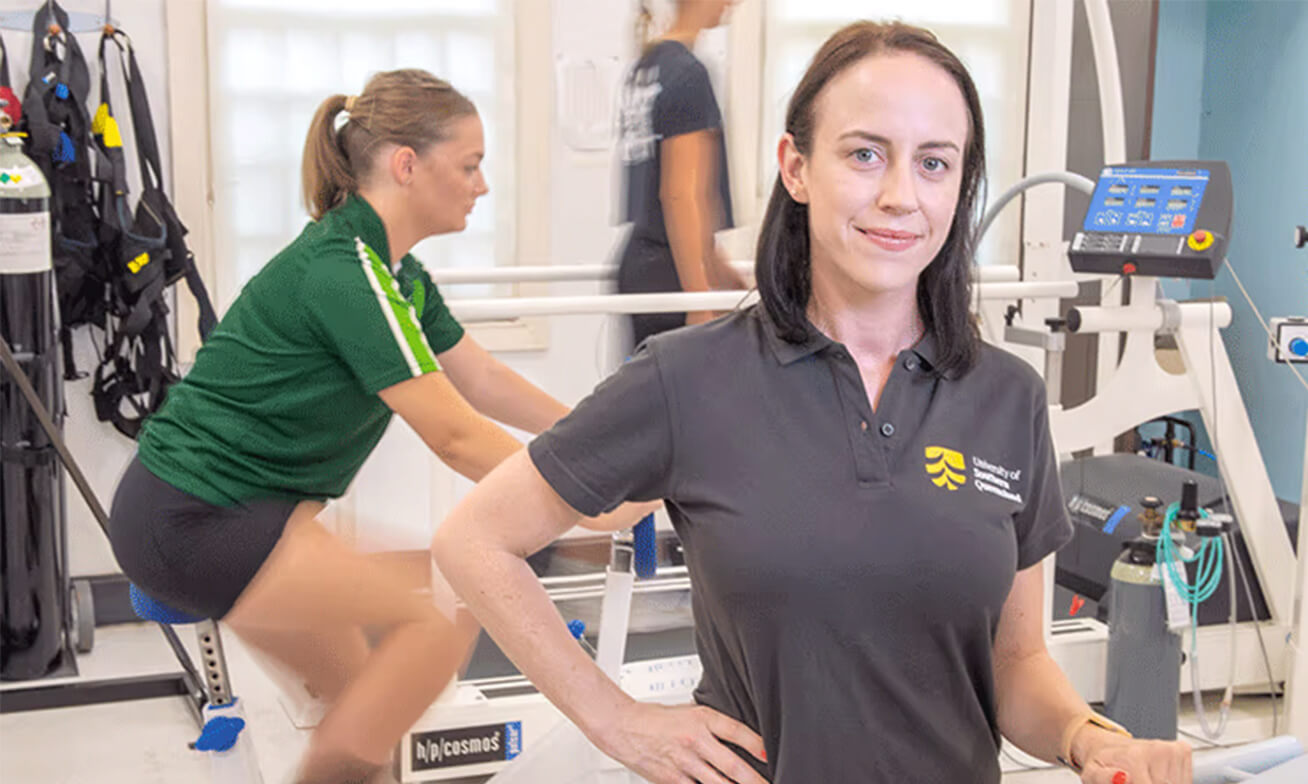
Periods, contraceptives and performance: The need for more education.
“While the menstrual cycle and hormonal contraception can undoubtedly be difficult conversation topics, it is imperative that an open environment is fostered within high-performance sport that allows female athletes to discuss their MC, particularly if issues arise.” – Dr. Brianna Larsen, UniSQ
Contacts
For more information, contact Dr Brianna Larsen.
What's 'Mind 2 WIN'?
‘Mind 2 WIN’ is a student-athlete education program designed to empower young athletes with a deeper understanding of the mind’s role in health, well-being, and performance. This program explores key psychological skills, including focus, resilience, self-awareness, and mindset strategies, equipping athletes with tools to optimize their mental approach to training and competition. Through interactive workshops, practical exercises, and real-world applications, students will learn how to enhance concentration, manage stress, and build confidence – ultimately strengthening their ability to perform under pressure. ‘Mind 2 WIN’ fosters a holistic approach to mental health, helping student-athletes cultivate a mindset that supports sustained success both on and off the field.
Winning Starts in the Mind
The Mind 2 WIN program explores the critical role of mindset in supporting athletic success. Athletes will engage in educational sessions covering key areas such as focus and concentration, stress and anxiety management, self-belief, and performance routines. These sessions will also include practical strategies related to Emotional Freedom Techniques (EFT) – Tapping, helping athletes develop the mental tools needed to perform at their best.
- Module 1: The Athlete Mindset: Explore the fundamentals of mindset and how beliefs, attitudes, and self-talk influence performance. Learn strategies to develop a growth mindset and enhance mental resilience.
- Module 2: Managing high pressure moments: Learn how stress impacts performance and well-being. Explore practical methods such as breathing techniques, mindfulness, and visualisation to manage anxiety and perform with confidence.
- Module 3: Confidence Builds Belief, Resilience & Mental Toughness: Discover how to bounce back from setbacks, build resilience, and develop a strong mental game by learning from elite athletes. Explore self-confidence in sport and develop strategies to strengthen self-belief, reframe negative thoughts, and maintain composure in competitive environments.
- Module 4: Mental Preparation Performance Routines: Learn how to create effective pre-game routines, use visualisation and EFT techniques, and implement mental preparation strategies to optimise performance on and off the field.
‘Mind 2 WIN’ Research
Tapping into Success: Unlocking Athletic Potential with EFTT!
Mental preparation in athletes linked to the ‘play present’ mindset, is key to athletic success, yet many student-athletes struggle to remain present with performance anxiety, self-doubt, and competitive pressures. Emotional Freedom Tapping Technique (EFTT), which combines cognitive therapy and self-applied acupressure (tapping pressure points), has gained the attention of world-class athletes for its potential to enhance mental well-being and performance.
This study will:
- examine its effects on high school student-athletes, focusing on stress reduction, confidence, and both athletic and academic performance.
- assess EFTT impact on key psychological and physiological factors, including pre-competition anxiety, concentration, and execution under pressure. While EFTT has shown promise in collegiate and adult athletes, research in high school student-athletes remains limited.
- aim to bridge that gap, offering insights into how Mind 2 WIN strategies can help young athletes reach their full potential on and off the field.
"In a time when staying present and focused is increasingly challenging for student-athletes, the Mind 2 WIN program provides tools for young athletes to calm the mind, manage stress, and enhance performance." - Professor Stephen Bird, UniSQ
‘Mind 2 WIN’ is an interdisciplinary initiative offered by the School of Psychology and Wellbeing and School of Health and Medical Sciences.
For more information, contact Professor Stephen Bird
What’s ‘Prep 2 WIN’ ?
Prep 2 WIN is an injury-prevention educational research program designed to help student-athletes reduce their risk of injury and improve their physical readiness for training and competition. Delivered by experts in strength and conditioning, biomechanics, physiotherapy, exercise physiology, and sport rehabilitation, the program centres on an evidence-based neuromuscular warm-up. Its goal is to support safer, more positive experiences for athletes at all levels by equipping them with the skills to warm up effectively, move efficiently, and build long-term athletic development.
"From a movement preparation perspective, the Prep 2 WIN neuromuscular warm-up may enhance proprioceptive input and kinesthetic awareness, improving an athlete’s ability to regain stability during sporting contexts and result in safer, more controlled athletic performance." - Professor Stephen Bird, UniSQ
Movement Matters
Prep 2 WIN explores the vital role of an evidence-based neuromuscular warm-up and effective athletic movement. Student-athletes participate in educational sessions covering movement preparation, movement quality, injury prevention and movement athleticism. Sessions also incorporate practical strategies, including jump landing biomechanical assessments and neuromuscular warm-up routines.
Part 1: Movement Matters
The first part of the program provides student-athletes with movement education through interactive workshops, including:
- Workshop 1. Movement Preparation – Why Warm-Up Matters: Athletes explore how neuromuscular warm-ups improve performance, reduce injury risk, and support long-term athlete development.
- Workshop 2. Movement Quality and Injury Prevention: Covers key concepts such as proper landing mechanics, joint alignment, balance and stability, and how improved movement skill reduces the likelihood of injury.
- Workshop 3. Training Techniques for Movement Athleticism: Provides tutorials and scenarios tailored to different sporting contexts, including safe change-of-direction mechanics, effective jumping and landing strategies, and proper deceleration and sprint initiation techniques.
Part 2: Movement Testing: Jump Landing Biomechanical Assessment
Athletes then move into the lab for jump landing biomechanical assessment followed by implementation of an Prep 2 WIN neuromuscular warm-up program.
- Initial Testing: Comprehensive biomechanical assessments to evaluate jump strategies associated with reducing biomechanical lower-limb injury risk.
- Neuromuscular warm-up program: A 6-week evidence-based neuromuscular warm-up, designed to improve movement athleticism.
- Coach-Led Supervision: UniSQ will educate school strength coaches to ensure proper technique and program implementation to optimise movement outcomes.
Prep 2 WIN’ Research
PREP 2 WIN BASKETBALL examined the effects of a 12-week neuromuscular warm-up program on force–time characteristics during countermovement jumps (CMJ) and drop jumps (DJ) in female youth basketball players – two actions closely linked to lower-limb injury risk. The pilot study demonstrated that a 3-month neuromuscular warm-up produced meaningful improvements in jump performance and movement strategy, both closely associated with reducing biomechanical factors linked to lower-limb injury risk in youth athletes.
Publication: Neuromuscular warm-ups and lower-limb injury risk: A 12-week pilot study in female youth basketball. Journal of Strength & Conditioning Research.
Prep 2 WIN Basketball is a multidisciplinary collaboration between the School of Health, Psychological and Medical Sciences, Flinders University and Basketball SA.
Contacts
For more information, contact Professor Stephen Bird.
What's ‘Sleep 2 WIN’?
‘Sleep 2 WIN’ is a student-athlete education program designed to provide young athletes with a fundamental understanding of sleep hygiene and its critical role in health and performance. The program provides an overview of sleep science, the connection between sleep and athletic performance, and how insufficient sleep can increase injury risk and impair athletic performance. Led by UniSQ experts in sleep and performance, ‘Sleep 2 WIN’ equips student-athletes with practical tools to improve their sleep hygiene, optimise recovery, and enhance performance both in sport and the classroom.
Unlocking the Power of Sleep
The Sleep 2 WIN program explores the critical role of sleep in supporting student-athlete health, wellbeing, and performance. Athletes engage in education sessions that introduce key principles of sleep science, the relationship between sleep and athletic performance, and the impact of insufficient sleep on recovery, injury risk, and learning.
- Module 1: Sleep Science – Understanding Your Sleep Habits: Learn the basics of sleep, including sleep stages, circadian rhythms, and how sleep deficits can increase the risk of injury, reducing overall health and recovery. Student will reflect on their own sleep habits to better understand how sleep fits into their daily training, school, and lifestyle demands.
- Module 2: Sleep Smart and Perform – Champions Dream Big: Understand the relationship between sleep duration and quality, cognitive function, and athletic performance, emphasizing the benefits of optimal sleep on reaction time, focus, and recovery. Students will reflect on recent training sessions or games where they felt well-rested versus fatigued and identify differences in concentration, movement quality, and perceived effort linked to their sleep habits.
- Module 3: Sleep Hygiene – Preparing your night to power your performance. Explore practical steps to improve sleep quality and learn pre-sleep routines to optimise your sleep and perform at your best. Students will apply sleep hygiene principles to design a personalised pre-sleep routine that supports recovery and performance.
‘Sleep 2 WIN’ Research
Building winning sleep habits, one night at a time!
Research has consistently shown that poor sleep practices negatively impact athletic performance, cognitive function, and increases injury risk. Student-athletes are particularly vulnerable to sleep deficiencies due to the demands of balancing academics, sports training, and social life. As a result, many student-athletes fail to meet the recommended sleep duration, leading to impaired recovery and suboptimal performance. The ‘Sleep 2 WIN’ research program is designed to investigate how targeted sleep hygiene education can improve student-athletes' sleep health, promoting better sleep practices. These projects will assess the effects of sleep education on sleep measures, such as sleep duration and quality, as well as perceived recovery and performance. To date, limited research has explored the efficacy of sleep education programs in high school student-athletes, making this research critical in promoting long-term health and performance.
“Sleep hygiene strategies should be incorporated into student-athletes sleep routines and used every night before bed to promote optimal sleep conditions. It is imperative that student-athletes recognise how fundamental sleep is to overall health and performance and constantly strive to improve their sleep hygiene practices.” – Professor Stephen Bird, UniSQ
What's 'Esports 2 WIN'?
Esports is a rapidly growing activity, with millions of young people participating in competitive gaming and esports programs. While esports provides opportunities for teamwork, skill development, and social connection, research has identified elevated levels of psychological distress, anxiety, and burnout among esports athletes. Extended periods of sedentary behaviour and limited physical activity may further contribute to risks to mental health and wellbeing. Esports 2 WIN is a new health education program, with a focus on Mental Health Literacy. The program aims to equip secondary school esports athletes with the knowledge, skills, and confidence to recognise mental health challenges, seek appropriate support, and develop healthier behaviours.
Esports 2 WIN Research
The Esports 2 WIN Mental Health Literacy program will deliver six weekly education sessions focusing on mental health literacy, physical activity, and reducing sedentary behaviour. Students will explore practical strategies to support their wellbeing, understand the importance of mental health in competitive esports, and develop healthy habits that can complement their performance and everyday lives. By introducing mental health education at the school level, Esports 2 WIN seeks to support young athletes early in their esports journey. The project will evaluate the program's acceptability and preliminary outcomes, helping inform the development of accessible, esports-specific mental health support for students, schools, and families across Australia.
“Esports players deserve the same quality of mental health and physical literacy support as any other athlete. Esports 2 WIN is about meeting young players where they are and giving them the tools to thrive, both in and out of the game.” – Dr Mitchell Nicholson, University of Southern Queensland
Contact
For more information, contact Dr Mitchell Nicholson.

Student-Athlete Research
Enhancing student-athletes’ movement skills with AI
This project aims to create a low-cost, objective, and automated system for screening the movements of pre-elite student-athletes using artificial intelligence (AI) and markerless motion capture technologies. It is particularly relevant for athlete talent identification and injury prevention programs leading up to the 2032 Brisbane Olympic Games, and it has broader applications in sports science, rehabilitation, and biomechanics. The system will enhance student-athlete movement skills by facilitating the development of tailored intervention strategies based on individual movement patterns. Mastering proper movement skills is essential for student-athletes. As Kobe Bryant famously said, "I NEVER GET BORED WITH THE BASICS."
Contacts
For more information, contact Patricio Pincheira or Dr Ben Hoffman.
Sleep Challenges in Student-Athletes
Sleep is critical for maintaining both physical and mental health, particularly in student-athletes who contend with unique demands. Research has consistently shown that poor sleep negatively impacts overall health and athletic performance, cognitive function, and psychological readiness to perform, and increases injury risk. Student-athletes are particularly vulnerable to sleep challenges due to the competing demands of balancing intense training schedules, academic pressures, and social stressors. As a result, many student-athletes fail to meet the recommended sleep duration, leading to impaired recovery and suboptimal performance. Additionally, nutrition is suggested to play a crucial role in the sleep of student-athletes. Poor dietary habits, such as irregular meal timing, high caffeine intake, and/or inadequate intake of macronutrients, can disrupt sleep and hinder recovery. Collectively understanding the relationship between nutrition and sleep in student-athletes can offer valuable insights for improving health, wellbeing, and performance.

The Research
This project will investigate the prevalence of sleep challenges among student-athletes and explore the link between sleep and dietary habits (i.e., the sleep-food connection). Participants will be asked to complete sleep and dietary assessments using validated questionnaires, wear an actigraphy device to objectively monitor sleep-wake cycles, and maintain a three-day food diary. The findings of this study will insights for future research on nutritional strategies to enhance sleep health in student-athletes.
“The negative impact of sleep restriction on student-athletes’ overall health and performance is one of the worst kept secrets. It is imperative that student-athletes recognise how fundamental sleep is to overall health and performance.” Professor Stephen Bird, UniSQ
Contact
If you would like further information, please contact:
Tanzeela Nisar (PhD Student Researcher)
Email: tanzeela.nisar@unisq.edu.au
This research is being conducted under the University of Southern Queensland PhD Research Program and is part of the Student-Athlete Empowerment Project.
PhD Student Researcher: Tanzeela Nisar
Supervisory team: Professor Stephen Bird, Dr Prajwal Gyawali, and Dr Andrea Fuller.
Investigator: Yu Yao Sun (Master of Research Student) | Email: yuyao.sun@unisq.edu.au
The aim of this study is to evaluate the feasibility and acceptability of implementing a 4-week, group-based Sleep 2 Win education program in high school basketball student-athletes. Specifically, the study will examine whether the intervention can be feasibly delivered within a high school team-sport setting, assess participant engagement and acceptability, and determine whether participation is associated with measurable changes in sleep hygiene knowledge, sleep-related behaviours, and on-court basketball performance.
For more information, contact Professor Stephen Bird.
This research is being conducted under the CSC-UniSQ Joint Funding Program in collaboration with Jilin University (China) and is part of the 2 WIN 2032 Student-Athlete Empowerment Project.
Supervisory Team: Professor Stephen Bird, School of Health, Psychological and Medical Sciences, UniSQ Professor Gavin Beccaria, School of Health, Psychological and Medical Sciences, UniSQ Professor Qiu Peng, School of Physical Education, Jilin University.
Investigator: Yidong XIa (Master of Research Student) | Jilin University
The primary aim of this study is to evaluate the acceptability and preliminary effectiveness of the Sleep 2 WIN education program by comparing changes in sleep behaviours, perceived stress, and anxiety between student-athletes participating in the intervention and non-athletes.
This research is being conducted under the CSC-UniSQ Joint Funding Program in collaboration with Jilin University (China) and is part of the 2 WIN 2032 Student-Athlete Empowerment Project.
Supervisory Team: Professor Stephen Bird (UniSQ), Professor Gavin Beccaria (UniSQ), Associate Professor Grace Wang (UniSQ) and Professor Qiu Peng (Jilin University).
For more information, contact Professor Stephen Bird.
This PhD programme will investigate post-activation performance enhancement (PAPE) across different conditioning strategies, with a particular focus on the balance between performance-enhancing effects and fatigue. Using an enhancement–fatigue dynamics framework, the research will examine how different strength stimuli, blood-flow restriction (BFR), and passive heat maintenance strategies influence the magnitude, timing, and consistency of the post-conditioning response. Rather than assuming a single optimal PAPE protocol, the programme will progressively examine the dose–response relationship, the extent to which fatigue can be reduced or controlled, and the transfer of PAPE to sport-relevant acceleration–deceleration performance. Importantly, the studies will link the prescribed conditioning activity with the actual fatigue cost experienced by individual athletes, including changes in movement velocity, to better explain differences in post-activation responses.
This research is being conducted under the CSC-UniSQ Joint Funding Program in collaboration with Jilin University (China) and is part of the 2 WIN 2032 Student-Athlete Empowerment Project.
Supervisory Team: Dr Chris Gaviglio, Dr Ben Hoffman and Professor Stephen Bird.
For more information, contact Dr Chris Gaviglio.
